Portal:Birds

The Birds Portal

Birds are a group of warm-blooded vertebrates constituting the class Aves (/ˈeɪviːz/), characterised by feathers, toothless beaked jaws, the laying of hard-shelled eggs, a high metabolic rate, a four-chambered heart, and a strong yet lightweight skeleton. Birds live worldwide and range in size from the 5.5 cm (2.2 in) bee hummingbird to the 2.8 m (9 ft 2 in) common ostrich. There are about ten thousand living species, more than half of which are passerine, or "perching" birds. Birds have wings whose development varies according to species; the only known groups without wings are the extinct moa and elephant birds. Wings, which are modified forelimbs, gave birds the ability to fly, although further evolution has led to the loss of flight in some birds, including ratites, penguins, and diverse endemic island species. The digestive and respiratory systems of birds are also uniquely adapted for flight. Some bird species of aquatic environments, particularly seabirds and some waterbirds, have further evolved for swimming.
Birds are feathered theropod dinosaurs and constitute the only known living dinosaurs. Likewise, birds are considered reptiles in the modern cladistic sense of the term, and their closest living relatives are the crocodilians. Birds are descendants of the primitive avialans (whose members include Archaeopteryx) which first appeared about 160 million years ago (mya) in China. According to DNA evidence, modern birds (Neornithes) evolved in the Middle to Late Cretaceous, and diversified dramatically around the time of the Cretaceous–Paleogene extinction event 66 mya, which killed off the pterosaurs and all non-avian dinosaurs.
Many social species pass on knowledge across generations, which is considered a form of culture. Birds are social, communicating with visual signals, calls, and songs, and participating in such behaviours as cooperative breeding and hunting, flocking, and mobbing of predators. The vast majority of bird species are socially (but not necessarily sexually) monogamous, usually for one breeding season at a time, sometimes for years, and rarely for life. Other species have breeding systems that are polygynous (one male with many females) or, rarely, polyandrous (one female with many males). Birds produce offspring by laying eggs which are fertilised through sexual reproduction. They are usually laid in a nest and incubated by the parents. Most birds have an extended period of parental care after hatching.
Many species of birds are economically important as food for human consumption and raw material in manufacturing, with domesticated and undomesticated birds being important sources of eggs, meat, and feathers. Songbirds, parrots, and other species are popular as pets. Guano (bird excrement) is harvested for use as a fertiliser. Birds figure throughout human culture. About 120 to 130 species have become extinct due to human activity since the 17th century, and hundreds more before then. Human activity threatens about 1,200 bird species with extinction, though efforts are underway to protect them. Recreational birdwatching is an important part of the ecotourism industry. (Full article...)
Featured articles

 In flight, Kilauea Point, Kauai, Hawaii
The red-tailed tropicbird (Phaethon rubricauda) is a seabird native to tropical parts of the Indian and Pacific Oceans. One of three closely related species of tropicbird (Phaethontidae), it was described by Pieter Boddaert in 1783. Superficially resembling a tern in appearance, it has almost all-white plumage with a black mask and a red bill. The sexes have similar plumage. As referenced in the common name, adults have red tail streamers that are about twice their body length. Four subspecies are recognised, but there is evidence of clinal variation in body size—with smaller birds in the north and larger in the south—and hence no grounds for subspecies.
The red-tailed tropicbird eats fish—mainly flying fish and squid—after catching them by plunge-diving into the ocean. Nesting takes place in loose colonies on oceanic islands; the nest itself is a scrape found on a cliff face, in a crevice, or on a sandy beach. A single egg is laid, then is incubated by both sexes for about six weeks. The parents make long food-foraging trips of about 150 hours during incubation, but once the chick has hatched, the parents specialize their foraging: one forages for the chick for a few hours at a time, while the other makes much longer trips to feed themselves.
This bird is considered to be a least-concern species according to the International Union for Conservation of Nature (IUCN), though it is adversely affected by human contact. Rats and feral cats prey on eggs and young at nesting sites. The bird's tail streamers were once prized by some Hawaiian and Maori peoples. (Full article...) From British Columbia, Canada
The killdeer (Charadrius vociferus) is a large plover found in the Americas. It was described and given its current scientific name in 1758 by Carl Linnaeus in the 10th edition of his Systema Naturae. Three subspecies are described. The killdeer's common name comes from its often-heard call. Its upperparts are mostly brown with rufous fringes, the head has patches of white and black, and two black bands cross the breast. The belly and the rest of the breast are white. The nominate (or originally described) subspecies breeds from southeastern Alaska and southern Canada to Mexico. It is seen year-round in the southern half of its breeding range; the subspecies C. v. ternominatus is resident in the West Indies, and C. v. peruvianus inhabits Peru and surrounding South American countries throughout the year. North American breeders winter from their resident range south to Central America, the West Indies, and the northernmost portions of South America.
The nonbreeding habitat of the killdeer includes coastal wetlands, beach habitats, and coastal fields. Its breeding grounds are generally open fields with short vegetation (but locations such as rooftops are sometimes used); although it is a shorebird, it does not necessarily nest close to water. The nest itself is a scrape lined with vegetation and white material, such as pebbles or seashell fragments. This bird lays a clutch of four to six buff to beige eggs with dark markings. The breeding season (starting with egg-laying) occurs from mid-March to August, with later timing of egg-laying in the northern portion of the range. Both parents incubate the eggs for 22 to 28 days typically. The young stay in the nest until the day after being hatched, when they are led by their parents to a feeding territory (generally with dense vegetation where hiding spots are abundant), where the chicks feed themselves. The young then fledge about 31 days after hatching, and breeding first occurs after one year of age.
The killdeer primarily feeds on insects, although other invertebrates and seeds are eaten. It forages almost exclusively in fields, especially those with short vegetation and with cattle and standing water. It primarily forages during the day, but in the nonbreeding season, when the moon is full or close to full, it forages at night, likely because of increased insect abundance and reduced predation during the night. Predators of the killdeer include various birds and mammals. Its multiple responses to predation range from calling to the "ungulate display", which can be fatal for the performing individual. This bird is classified as least concern by the International Union for Conservation of Nature, because of its large range and population. Its population is declining, but this trend is not severe enough for the killdeer to be considered a vulnerable species. It is protected by the American Migratory Bird Treaty Act of 1918 and the Canadian Migratory Birds Convention Act. (Full article...) Cape petrel (Daption capense)
The family Procellariidae is a group of seabirds that comprises the fulmarine petrels, the gadfly petrels, the diving petrels, the prions, and the shearwaters. This family is part of the bird order Procellariiformes (or tubenoses), which also includes the albatrosses and the storm petrels.
The procellariids are the most numerous family of tubenoses, and the most diverse. They range in size from the giant petrels with a wingspan of around 2.0 m (6 ft 7 in), that are almost as large as the albatrosses, to the diving petrels with a wingspan of around 34 cm (13 in) that are similar in size to the little auks or dovekies in the family Alcidae. Male and female birds are identical in appearance. The plumage color is generally dull, with blacks, whites, browns and grays. The birds feed on fish, squid and crustacea, with many also taking fisheries discards and carrion. Whilst agile swimmers and excellent in water, petrels have weak legs and can only shuffle on land, with the giant petrels of the genus Macronectes being the only two species that can properly walk. All species are accomplished long-distance foragers, and many undertake long trans-equatorial migrations. They are colonial breeders, exhibiting long-term mate fidelity and site philopatry. In all species, a single white egg is laid each breeding season. The parents take it in turns to incubate the egg and to forage for food. The feeding area can be at a great distance from the nest site. The incubation times and chick-rearing periods are exceptionally long compared to other birds.
Many procellariids have breeding populations of over several million pairs; others number fewer than 200 birds. Humans have traditionally exploited several species of fulmar and shearwater (known as muttonbirds) for food, fuel, and bait, a practice that continues in a controlled fashion today. Several species are threatened by introduced species attacking adults and chicks in breeding colonies and by long-line fisheries. (Full article...)cropped.jpg.webp)
The white-necked rockfowl (Picathartes gymnocephalus) is a medium-sized bird in the family Picathartidae, with a long neck and tail. Also known as the white-necked picathartes, this passerine is mainly found in rocky forested areas at higher altitudes in West Africa from Guinea to Ghana. Its distribution is patchy, with populations often being isolated from each other. The rockfowl typically chooses to live near streams and inselbergs. It has no recognized subspecies, though some believe that it forms a superspecies with the grey-necked rockfowl. The white-necked rockfowl has greyish-black upperparts and white underparts. Its unusually long, dark brown tail is used for balance, and its thighs are muscular. The head is nearly featherless, with the exposed skin being bright yellow except for two large, circular black patches located just behind the eyes. Though the bird is usually silent, some calls are known.
These rockfowl feed primarily on insects, though parents feed small frogs to their young. One feeding strategy involves following Dorylus army ant swarms, feeding on insects flushed by the ants. Rockfowl move through the forest primarily through a series of hops and bounds or short flights in low vegetation. This species rarely flies for long distances. The white-necked rockfowl is monogamous and pairs nest either alone or in the vicinity of other pairs, sometimes in colonies with as many as eight nests. These nests are constructed out of mud formed into a deep cup and are built on rock surfaces, typically in caves. Two eggs are laid twice a year. Though the birds breed in colonies, infanticide is fairly common in this species, with rockfowl attempting to kill the young of other pairs. Nestlings mature in about a month. This bird is long-lived.
This species is classified as Vulnerable as its dwindling and fragmented populations are threatened by habitat destruction. Conservation efforts are underway in parts of its range in the form of habitat protection, education efforts, and new laws. Some of the indigenous peoples of Sierra Leone considered the species to be a protector of the home of their ancestral spirits. This rockfowl is considered one of Africa's most desirable birds by birders and is a symbol of ecotourism across its range. (Full article...).jpg.webp) Condor #534 soaring over the Grand Canyon, U.S.
Condor #534 soaring over the Grand Canyon, U.S.
The California condor (Gymnogyps californianus) is a New World vulture and the largest North American land bird. It became extinct in the wild in 1987 when all remaining wild individuals were captured, but has since been reintroduced to northern Arizona and southern Utah (including the Grand Canyon area and Zion National Park), the coastal mountains of California, and northern Baja California in Mexico. Although four other fossil members are known, it is the only surviving member of the genus Gymnogyps. The species is listed by the International Union for the Conservation of Nature as Critically Endangered, and similarly considered Critically Imperiled by NatureServe.
The plumage is black with patches of white on the underside of the wings; the head is largely bald, with skin color ranging from gray on young birds to yellow and bright orange on breeding adults. Its 3.0 m (9.8 ft) wingspan is the widest of any North American bird, and its weight of up to 12 kg (26 lb) nearly equals that of the trumpeter swan, the heaviest among native North American bird species. The condor is a scavenger and eats large amounts of carrion. It is one of the world's longest-living birds, with a lifespan of up to 60 years.
Condor numbers dramatically declined in the 20th century due to agricultural chemicals (DDT), poaching, lead poisoning, and habitat destruction. A conservation plan put in place by the United States government led to the capture of all the remaining wild condors by 1987, with a total population of 27 individuals. These surviving birds were bred at the San Diego Wild Animal Park and the Los Angeles Zoo. Numbers rose through captive breeding, and beginning in 1991, condors were reintroduced into the wild. Since then, their population has grown, but the California condor remains one of the world's rarest bird species. In December 2020 there were 504 California condors living in the wild or in captivity, while by December 2022 the population totaled 537, of which 336 lived in the wild. The condor is a significant bird to many Californian Native American groups and plays an important role in several of their traditional myths. (Full article...) 1893 illustration by John Gerrard Keulemans, based on the specimen in Muséum National d'Histoire Naturelle in Paris, one of two in existence
The Mascarene parrot or mascarin (Mascarinus mascarinus) is an extinct species of parrot that was endemic to the Mascarene island of Réunion in the western Indian Ocean. The taxonomic relationships of this species have been subject to debate; it has historically been grouped with either the Psittaculini parrots or the vasa parrots, with the latest genetic study favouring the former group.
The Mascarene parrot was 35 cm (14 in) in length with a large red bill and long, rounded tail feathers. Its legs were red, and it had naked red skin around the eyes and nostrils. It had a black facial mask and partially white tail feathers, but the colouration of the body, wings and head in the living bird is unclear. Descriptions from life indicate the body and head were ash grey, and the white part of the tail had two dark central feathers. In contrast, stuffed specimens and old descriptions based on them indicate that the body was brown and the head bluish. This may be due to the specimens having changed colour as a result of ageing and exposure to light. Very little is known about the bird in life.
The Mascarene parrot was first mentioned in 1674, and live specimens were later brought to Europe, where they lived in captivity. The species was scientifically described in 1771. Only two stuffed specimens exist today, in Paris and Vienna. The date and cause of extinction for the Mascarene parrot is unclear. The latest account, from 1834, is considered dubious, so it is probable that the species became extinct prior to 1800, and may have become extinct even earlier. (Full article...)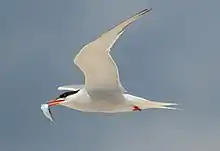
The common tern (Sterna hirundo) is a seabird in the family Laridae. This bird has a circumpolar distribution, its four subspecies breeding in temperate and subarctic regions of Europe, Asia and North America. It is strongly migratory, wintering in coastal tropical and subtropical regions. Breeding adults have light grey upperparts, white to very light grey underparts, a black cap, orange-red legs, and a narrow pointed bill. Depending on the subspecies, the bill may be mostly red with a black tip or all black. There are several similar species, including the partly sympatric Arctic tern, which can be separated on plumage details, leg and bill colour, or vocalisations.
Breeding in a wider range of habitats than any of its relatives, the common tern nests on any flat, poorly vegetated surface close to water, including beaches and islands, and it readily adapts to artificial substrates such as floating rafts. The nest may be a bare scrape in sand or gravel, but it is often lined or edged with whatever debris is available. Up to three eggs may be laid, their dull colours and blotchy patterns providing camouflage on the open beach. Incubation is by both sexes, and the eggs hatch in around 21–22 days, longer if the colony is disturbed by predators. The downy chicks fledge in 22–28 days. Like most terns, this species feeds by plunge-diving for fish, either in the sea or in freshwater, but molluscs, crustaceans and other invertebrate prey may form a significant part of the diet in some areas.
Eggs and young are vulnerable to predation by mammals such as rats and American mink, and large birds including gulls, owls and herons. Common terns may be infected by lice, parasitic worms, and mites, although blood parasites appear to be rare. Its large population and huge breeding range mean that this species is classed as being of least concern, although numbers in North America have declined sharply in recent decades. Despite international legislation protecting the common tern, in some areas, populations are threatened by habitat loss, pollution, or the disturbance of breeding colonies. (Full article...)%E2%80%93Macaroni_penguin_(Eudyptes_chrysolophus)_01.jpg.webp)
The macaroni penguin (Eudyptes chrysolophus) is a species of penguin found from the Subantarctic to the Antarctic Peninsula. One of six species of crested penguin, it is very closely related to the royal penguin, and some authorities consider the two to be a single species. It bears a distinctive yellow crest, and the face and upperparts are black and sharply delineated from the white underparts. Adults weigh on average 5.5 kg (12 lb) and are 70 cm (28 in) in length. The male and female are similar in appearance; the male is slightly larger and stronger with a relatively larger bill. Like all penguins, it is flightless, with a streamlined body and wings stiffened and flattened into flippers for a marine lifestyle.It has a small eye and is good at seeing.
Its diet consists of a variety of crustaceans, mainly krill, as well as small fish and cephalopods; the species consumes more marine life annually than any other species of seabird. These birds moult once a year, spending about three to four weeks ashore, before returning to the sea. Numbering up to 100,000 individuals, the breeding colonies of the macaroni penguin are among the largest and densest of all penguin species. After spending the summer breeding, penguins disperse into the oceans for six months; a 2009 study found that macaroni penguins from Kerguelen travelled over 10,000 km (6,200 mi) in the central Indian Ocean. With about 18 million individuals, the macaroni penguin is the most numerous penguin species. Widespread declines in populations have been recorded since the mid-1970s and their conservation status is classified as vulnerable. (Full article...)
The common raven (Corvus corax) is a large all-black passerine bird. It is the most widely distributed of all corvids, found across the Northern Hemisphere. It is a raven known by many names at the subspecies level; there are at least eight subspecies with little variation in appearance, although recent research has demonstrated significant genetic differences among populations from various regions. It is one of the two largest corvids, alongside the thick-billed raven, and is possibly the heaviest passerine bird; at maturity, the common raven averages 63 centimetres (25 inches) in length and 1.2 kilograms (2.6 pounds) in mass. Although their typical lifespan is considerably shorter, common ravens can live more than 23 years in the wild. Young birds may travel in flocks but later mate for life, with each mated pair defending a territory.
Common ravens have coexisted with humans for thousands of years and in some areas have been so numerous that people have regarded them as pests. Part of their success as a species is due to their omnivorous diet; they are extremely versatile and opportunistic in finding sources of nutrition, feeding on carrion, insects, cereal grains, berries, fruit, small animals, nesting birds, and food waste. Some notable feats of problem-solving provide evidence that the common raven is unusually intelligent.
Over the centuries, the raven has been the subject of mythology, folklore, art, and literature. In many cultures, including the indigenous cultures of Scandinavia, ancient Ireland and Wales, Bhutan, the northwest coast of North America, and Siberia and northeast Asia, the common raven has been revered as a spiritual figure or godlike creature. (Full article...) Portrait by Gerard Soest between 1657 and 1660
Francis Willughby (sometimes spelt Willoughby, Latin: Franciscus Willughbeius) FRS (22 November 1635 – 3 July 1672) was an English ornithologist and ichthyologist, and an early student of linguistics and games.
He was born and raised at Middleton Hall, Warwickshire, the only son of an affluent country family. He was a student at Trinity College, Cambridge, where he was tutored by the mathematician and naturalist John Ray, who became a lifetime friend and colleague, and lived with Willughby after 1662 when Ray lost his livelihood through his refusal to sign the Act of Uniformity. Willughby was elected as a Fellow of the Royal Society in 1661, then aged 27.
Willughby, Ray, and others such as John Wilkins were advocates of a new way of studying science, relying on observation and classification, rather than the received authority of Aristotle and the Bible. To this end, Willughby, Ray and their friends undertook a number of journeys to gather information and specimens, initially in England and Wales, but culminating in an extensive tour of continental Europe, visiting museums, libraries and private collections as well as studying local animals and plants. After their continental tour, he and Ray lived and worked mainly at Middleton Hall. Willughby married Emma Barnard in 1668 and the couple had three children. (Full article...).jpg.webp)
The black-and-yellow broadbill (Eurylaimus ochromalus) is a species of bird in the typical broadbill family Eurylaimidae. A small, distinctive species, it has a black head, breastband, and upperparts, a white neckband, yellow streaking on the back and wings, and wine-pink underparts that turn yellow towards the belly. The beak is bright blue, with a green tip to the upper mandible and black edges. It shows some sexual dimorphism, with the black breastband being incomplete in females.
Native to Brunei, Indonesia, Malaysia, Myanmar, Singapore, and Thailand, it inhabits evergreen forest, dipterocarp forest, swamp forest, heath forest, and forest edge, along with secondary forest and plantations that contain large trees. Mainly inhabiting lowlands, the species is found up to elevations of 1,220 m (4,000 ft). The black-and-yellow broadbill is mainly insectivorous, but also feeds on molluscs and incidentally takes fruit.
The black-and-yellow broadbill breeds during the dry season throughout its range, with both sexes helping build a large, untidy, pear-shaped nest out of moss, fungal mycelia, and leaves. Eggs are laid in clutches of 2–3, sometimes containing a fourth runt egg, and are incubated by both sexes. The species is listed as near-threatened by the IUCN due to a decline in its population caused by habitat loss. (Full article...) A male splendid fairywren in New South Wales, Australia
The splendid fairywren (Malurus splendens) is a passerine bird in the Australasian wren family, Maluridae. It is also known simply as the splendid wren or more colloquially in Western Australia as the blue wren. The splendid fairywren is found across much of the Australian continent from central-western New South Wales and southwestern Queensland over to coastal Western Australia. It inhabits predominantly arid and semi-arid regions. Exhibiting a high degree of sexual dimorphism, the male in breeding plumage is a small, long-tailed bird of predominantly bright blue and black colouration. Non-breeding males, females and juveniles are predominantly grey-brown in colour; this gave the early impression that males were polygamous as all dull-coloured birds were taken for females. It comprises several similar all-blue and black subspecies that were originally considered separate species.
Like other fairywrens, the splendid fairywren is notable for several peculiar behavioural characteristics; the birds are socially monogamous and sexually promiscuous, meaning that although they form pairs between one male and one female, each partner will mate with other individuals and even assist in raising the young from such trysts. Male wrens pluck pink or purple petals and display them to females as part of a courtship display.
The habitat of the splendid fairywren ranges from forest to dry scrub, generally with ample vegetation for shelter. Unlike the eastern superb fairywren, it has not adapted well to human occupation of the landscape and has disappeared from some urbanised areas. The splendid fairywren mainly eats insects and supplements its diet with seeds. (Full article...) Adult male, Inskip Point
The black-breasted buttonquail (Turnix melanogaster) is a rare buttonquail endemic to eastern Australia. As with other buttonquails, it is unrelated to the true quails. The black-breasted buttonquail is a plump quail-shaped bird 17–19 cm (6.7–7.5 in) in length with predominantly marbled black, rufous, and pale brown plumage, marked prominently with white spots and stripes, and white eyes. Like other buttonquails, the female is larger and more boldly coloured than the male, with a distinctive black head and neck sprinkled with fine white markings. The usual sex roles are reversed, as the female mates with multiple male partners and leaves them to incubate the eggs.
The black-breasted buttonquail is usually found in rainforests, foraging on the ground for invertebrates in large areas of thick leaf litter. Most of its original habitat has been cleared and the remaining populations are fragmented. The species is rated as vulnerable on the International Union for Conservation of Nature (IUCN)'s Red List of Endangered species and is listed as vulnerable under the Environment Protection and Biodiversity Conservation Act 1999. A three-year conservation project has been under way since 2021. (Full article...) Adult male at Chiltern, Victoria, Australia
The red-capped robin (Petroica goodenovii) is a small passerine bird native to Australia. Found in drier regions across much of the continent, it inhabits scrub and open woodland. Like many brightly coloured robins of the family Petroicidae, it is sexually dimorphic. Measuring 10.5–12.5 cm (4.1–4.9 in) in length, the robin has a small, thin, black bill, and dark brown eyes and legs. The male has a distinctive red cap and red breast, black upperparts, and a black tail with white tips. The underparts and shoulders are white. The female is an undistinguished grey-brown. This species uses a variety of songs, and males generally sing to advertise territories and attract females. Birds are encountered in pairs or small groups, but the social behaviour has been little studied.
The position of the red-capped robin is unclear; it and its relatives are unrelated to European or American robins, but they appear to be an early offshoot of the songbird infraorder Passerida. The red-capped robin is a predominantly ground-feeding bird, and its prey consists of insects and spiders. Although widespread, it is uncommon in much of its range and has receded in some areas from human activity. (Full article...) Specimen in Musée Cantonal de Zoologie, Lausanne
The hoopoe starling (Fregilupus varius), also known as the Réunion starling or Bourbon crested starling, is a species of starling that lived on the Mascarene island of Réunion and became extinct in the 1850s. Its closest relatives were the also-extinct Rodrigues starling and Mauritius starling from nearby islands, and the three apparently originated in south-east Asia. The bird was first mentioned during the 17th century and was long thought to be related to the hoopoe, from which its name is derived. Some affinities have been proposed, but it was confirmed as a starling in a DNA study.
The hoopoe starling was 30 cm (12 in) in length. Its plumage was primarily white and grey, with its back, wings and tail a darker brown and grey. It had a light, mobile crest, which curled forwards. The bird is thought to have been sexually dimorphic, with males larger and having more curved beaks. The juveniles were more brown than the adults. Little is known about hoopoe starling behaviour. Reportedly living in large flocks, it inhabited humid areas and marshes. The hoopoe starling was omnivorous, feeding on plant matter and insects. Its pelvis was robust, its feet and claws large, and its jaws strong, indicating that it foraged near the ground.
The birds were hunted by settlers on Réunion, who also kept them as pets. Nineteen specimens exist in museums around the world. The hoopoe starling was reported to be in decline by the early 19th century and was probably extinct before the 1860s. Several factors have been proposed, including competition and predation by introduced species, disease, deforestation, and persecution by humans, who hunted it for food and as an alleged crop pest. (Full article...)
The fauna of Scotland is generally typical of the northwest European part of the Palearctic realm, although several of the country's larger mammals were hunted to extinction in historic times and human activity has also led to various species of wildlife being introduced. Scotland's diverse temperate environments support 62 species of wild mammals, including a population of wild cats, important numbers of grey and harbour seals and the most northerly colony of bottlenose dolphins in the world.
Many populations of moorland birds, including the black and red grouse live here, and the country has internationally significant nesting grounds for seabirds such as the northern gannet. The golden eagle has become a national icon, and white-tailed eagles and ospreys have recently re-colonised the land. The Scottish crossbill is the only endemic vertebrate species in the UK.
Scotland's seas are among the most biologically productive in the world; it is estimated that the total number of Scottish marine species exceeds 40,000. The Darwin Mounds are an important area of deep sea cold water coral reefs discovered in 1998. Inland, nearly 400 genetically distinct populations of Atlantic salmon live in Scottish rivers. Of the 42 species of fish found in the country's fresh waters, half have arrived by natural colonisation and half by human introduction. (Full article...) male
male
The turquoise parrot (Neophema pulchella) is a species of parrot in the genus Neophema native to Eastern Australia, from southeastern Queensland, through New South Wales and into North-Eastern Victoria. It was described by George Shaw in 1792. A small lightly built parrot at around 20 cm (7.9 in) long and 40 g (1+1⁄2 oz) in weight, it exhibits sexual dimorphism. The male is predominantly green with more yellowish underparts and a bright turquoise blue face. Its wings are predominantly blue with red shoulders. The female is generally duller and paler, with a pale green breast and yellow belly, and lacks the red wing patch.
Found in grasslands and open woodlands dominated by Eucalyptus and Callitris trees, the turquoise parrot feeds mainly on grasses and seeds and occasionally flowers, fruit and scale insects. It nests in hollows of gum trees. Much of its habitat has been altered and potential nesting sites lost. Predominantly sedentary, the turquoise parrot can be locally nomadic. Populations appear to be recovering from a crash in the early 20th century. The turquoise parrot has been kept in captivity since the 19th century, and several colour variants exist. (Full article...)
The American white ibis (Eudocimus albus) is a species of bird in the ibis family, Threskiornithidae. It is found from Virginia via the Gulf Coast of the United States south through most of the coastal New World tropics. This particular ibis is a medium-sized bird with an overall white plumage, bright red-orange down-curved bill and long legs, and black wing tips that are usually only visible in flight. Males are larger and have longer bills than females. The breeding range runs along the Gulf and Atlantic Coast, and the coasts of Mexico and Central America. Outside the breeding period, the range extends further inland in North America and also includes the Caribbean. It is also found along the northwestern South American coastline in Colombia and Venezuela. Populations in central Venezuela overlap and interbreed with the scarlet ibis. The two have been classified by some authorities as a single species.
Their diet consists primarily of small aquatic prey, such as insects and small fishes. Crayfish are its preferred food in most regions, but it can adjust its diet according to the habitat and prey abundance. Its main foraging behavior is probing with its beak at the bottom of shallow water to feel for and capture its prey. It does not see the prey.
During the breeding season, the American white ibis gathers in huge colonies near water. Pairs are predominantly monogamous and both parents care for the young, although males tend to engage in extra-pair copulation with other females to increase their reproductive success. Males have also been found to pirate food from unmated females and juveniles during the breeding season. (Full article...) Adult, subsp. personata, Midway Atoll
The masked booby (Sula dactylatra), also called the masked gannet or the blue-faced booby, is a large seabird of the booby and gannet family, Sulidae. First described by the French naturalist René-Primevère Lesson in 1831, the masked booby is one of six species of booby in the genus Sula. It has a typical sulid body shape, with a long pointed yellowish bill, long neck, aerodynamic body, long slender wings and pointed tail. The adult is bright white with black wings, a black tail and a dark face mask; at 75–85 cm (30–33 in) long, it is the largest species of booby. The sexes have similar plumage. This species ranges across tropical oceans, except in the eastern Atlantic and eastern Pacific. In the latter, it is replaced by the Nazca booby (Sula granti), which was formerly regarded as a subspecies of masked booby.
Nesting takes place in colonies, generally on islands and atolls far from the mainland and close to deep water required for foraging. Territorial when breeding, the masked booby performs agonistic displays to defend its nest. Potential and mated pairs engage in courtship and greeting displays. The female lays two chalky white eggs in a shallow depression on flat ground away from vegetation. The chicks are born featherless, but are soon covered in white down. The second chick born generally does not survive and is killed by its elder sibling. These birds are spectacular plunge divers, plunging into the ocean at high speed in search of prey—mainly flying fish. The species faces few threats; although its population is declining, it is considered to be a least-concern species by the International Union for Conservation of Nature (IUCN). (Full article...) As lady mayoress of Reigate in 1913
Margaretta "Etta" Louisa Lemon MBE (née Smith; 22 November 1860 – 8 July 1953) was an English bird conservationist and a founding member of what is now the Royal Society for the Protection of Birds (RSPB). She was born into an evangelical Christian family in Kent, and after her father's death she increasingly campaigned against the use of plumage in hatmaking which had led to billions of birds being killed for their feathers. She founded the Fur, Fin and Feather Folk with Eliza Phillips in Croydon in 1889, which two years later merged with Emily Williamson's Manchester-based Society for the Protection of Birds (SPB), also founded in 1889. The new organisation adopted the SPB title, and the constitution for the merged society was written by Frank Lemon, who became its legal adviser. Etta married Frank Lemon in 1892, and as Mrs Lemon she became the first honorary secretary of the SPB, a post she kept until 1904, when the society became the RSPB.
The Lemons led the RSPB for more than three decades, although Etta's conservatism, authoritarian management and opposition to scientific ornithology increasingly led to clashes with the organisation's committee. She was pressured to resign from her leadership role in 1938, aged 79. During her tenure, the Importation of Plumage (Prohibition) Act 1921 restricted the international trade in feathers, but did not prevent their being sold or worn.
Lemon was appointed a Member of the Order of the British Empire in 1920 for her management of the Redhill War Hospital during the First World War. She worked for many other organisations, including the Royal Earlswood Hospital, the Women's National Anti-Suffrage League, and the local Red Cross branch. Lemon was one of the first four female honorary members of the British Ornithologists' Union (BOU) admitted in 1909, although she never considered herself to be an ornithologist. She died at Redhill aged 92 in 1953 and was buried next to her husband at Reigate cemetery. (Full article...)

Selected general bird topic

Bird conservation is a field in the science of conservation biology related to threatened birds. Humans have had a profound effect on many bird species. Over one hundred species have gone extinct in historical times, although the most dramatic human-caused extinctions occurred in the Pacific Ocean as humans colonised the islands of Melanesia, Polynesia and Micronesia, during which an estimated 750–1,800 species of birds became extinct. According to Worldwatch Institute, many bird populations are currently declining worldwide, with 1,200 species facing extinction in the next century. The biggest cited reason surrounds habitat loss. Other threats include overhunting, accidental mortality due to structural collisions, long-line fishing bycatch, pollution, competition and predation by pet cats, oil spills and pesticide use and climate change. Governments, along with numerous conservation charities, work to protect birds in various ways, including legislation, preserving and restoring bird habitat, and establishing captive populations for reintroductions.
See Late Quaternary prehistoric birds for birds which disappeared in prehistoric and early historic times, usually due to human activity (i.e., starting with the Upper Paleolithic Revolution). For birds having gone extinct in modern times (since 1500), see List of extinct birds. (Full article...)Selected taxon
 Great hornbill Buceros bicornis from Mangaon, Raigad, Maharashtra, India |
Hornbills (Bucerotidae) are a family of bird found in tropical and subtropical Africa, Asia and Melanesia. They are characterized by a long, down-curved bill which is frequently brightly coloured and sometimes has a casque on the upper mandible. Both the common English and the scientific name of the family refer to the shape of the bill, "buceros" being "cow horn" in Greek. Hornbills have a two-lobed kidney. They are the only birds in which the first and second neck vertebrae (the atlas and axis respectively) are fused together; this probably provides a more stable platform for carrying the bill. The family is omnivorous, feeding on fruit and small animals. They are monogamous breeders nesting in natural cavities in trees and sometimes cliffs. A number of mainly insular species of hornbill with small ranges are threatened with extinction, namely in Southeast Asia.
In the Neotropical realm, toucans occupy the hornbills' ecological niche, an example of convergent evolution. Despite their close appearances, the two groups are not related, with toucans being allied with the woodpeckers, honeyguides and several families of barbet, while hornbills (and their close relatives the ground hornbills) are allied with the hoopoes and wood-hoopoes. (Full article...)Topics
Anatomy: Anatomy • Skeleton • Flight • Eggs • Feathers • Plumage
Evolution and extinction: Evolution • Archaeopteryx • Hybridisation • Late Quaternary prehistoric birds • Fossils • Taxonomy • Extinction
Behaviour: Singing • Intelligence • Migration • Reproduction • Nesting • Incubation • Brood parasites
Bird orders: Struthioniformes • Tinamiformes • Anseriformes • Accipitriformes • Galliformes • Gaviiformes • Podicipediformes • Procellariiformes • Sphenisciformes • Pelecaniformes • Ciconiiformes • Phoenicopteriformes • Falconiformes • Gruiformes • Charadriiformes • Pteroclidiformes • Columbiformes • Psittaciformes • Cuculiformes • Strigiformes • Caprimulgiformes • Apodiformes • Coraciiformes • Piciformes • Trogoniformes • Coliiformes • Passeriformes
Bird lists: Families and orders • Lists by region
Birds and humans: Ringing • Ornithology • Bird collections • Birdwatching • Birdfeeding • Conservation • Aviculture
Quotes
| “ | I value my garden more for being full of blackbirds than of cherries, and very frankly give them fruit for their songs. | ” |
Resources
Free online resources:
- SORA: The Searchable Online Research Archive (SORA) has decades worth of archives of the following journals: The Auk, The Condor, Journal of Field Ornithology, North American Bird Bander, Studies in Avian Biology, Pacific Coast Avifauna, and The Wilson Bulletin. Coverage ends around 2000. The ability to search all journals or browse exists on the front page.
- Notornis: The Journal of the Ornithological Society of New Zealand covers New Zealand and the South Pacific.
- New Zealand Journal of Ecology: This journal often publishes bird-related articles. Like Notornis, this journal is concerned with New Zealand and surrounding areas.
- Marine Ornithology: Published by the numerous seabird research groups, Marine Ornithology is specific and goes back many years.
- BirdLife International: The Data Zone has species accounts for every species, although threatened species and some key groups have greater detail with others only having status and evaluation.
- Author Index: This is a good source for binomial authorities for taxoboxes.
There is also Birds of North America, Cornell University's massive project collecting information on every breeding bird in the ABA area. It is available for US$40 a year.
For more sources, including printed sources, see WikiProject Birds.
WikiProjects

- WikiProject Birds
- WikiProject Science
- WikiProject History of Science
- WikiProject Tree of Life
- WikiProject Biology
- WikiProject Ecology
- WikiProject Extinction
Selected images
 Photograph: JJ HarrisonThe noisy miner (Manorina melanocephala) is a bird in the honeyeater family endemic to eastern and south-eastern Australia and feeds mostly nectar, fruit and insects. This highly vocal species has a large range of songs, calls, scoldings and alarms, lives in large groups, and is territorial. Populations have grown in numerous places along this miner's range, and as such there is now an overabundance.
 Photo: JJ HarrisonTickell's Blue Flycatcher (Cyornis tickelliae) is a small passerine bird found in dense scrub to forest habitats through tropical Asia. Males, as pictured here, have vibrant colours; females are a duller blue. The birds feed on insects, either those caught flying or found on the ground.
 Photo credit: Chuck SzmurloThe California Condor (Gymnogyps californianus) is a critically endangered species of North American bird in the New World vulture family Cathartidae. It has the largest wingspan of any bird found in North America and is one of the heaviest. The condor is a scavenger and eats large amounts of carrion. The California Condor is one of the world's rarest bird species. In 1987, all 22 remaining wild individuals were captured. Thanks to captive breeding, numbers rose, and beginning in 1991, they were reintroduced to the wild. As of March 2008, there are 297 condors known to be living including 146 in the wild.
 Chinese goose head at List of goose breeds
 Photo credit: MdfThe American Tree Sparrow (Spizella arborea) is a medium-sized American sparrow found on the tundra or the northern limits of the boreal forest in Alaska and northern Canada. These birds migrate to the United States or southern Canada to spend the winter.
 Photo credit: Noodle snacksA Silvereye (Zosterops lateralis) perched on a blooming Cestrum species. The Silvereye is a very small passerine bird (~12 cm (4.7 in) in length) native to the Australasia region. Silvereyes are omnivorous but have a particular fondness for fruit. Some orchardists, grape growers, and home gardeners regard them as a pest particularly as, being so small, Silvereyes simply ignore bird nets, popping in and out through the netting at will.
 Photo: JJ HarrisonThe Bassian Thrush (Zoothera lunulata) is a medium-sized mostly insectivorous thrush found predominantly in shrubland, forests, and rainforests of southeastern Australia including Tasmania. It grows to about 28 cm (11 in) in length and about 100 g (3.5 oz) in weight.
 Canada goose
 Photo: Ironman brThe Golden Parakeet (Guaruba guarouba) is an endangered species of Neotropical parrot that lives in the drier, upland rainforests in the Amazon Basin. Males and females appear alike, being mainly yellow with green in the outer wings and with an all-yellow tail. It has a breeding system that is almost unique amongst parrots, as pairs are aided by a number of helpers which aid in the raising of the young.
 Photo: JJ HarrisonThe Azure Kingfisher (Alcedo azurea) is a small kingfisher found in Australia, Papua New Guinea, and parts of Indonesia. First described in 1802, seven subspecies are known.
 Malurus cyaneus cyanochlamys, juvenile
 Photo: JJ HarrisonThe Great Shearwater (Puffinus gravis) is a large shearwater in the seabird family Procellariidae which feeds on fish and squid, which it catches from the surface or by plunge-diving. It is one of the few birds which migrate from breeding grounds in the Southern Hemisphere to the Northern Hemisphere. It flies by dipping from side to side on stiff wings, the wingtips almost touching the water, with few wingbeats.
 The prothonotary warbler (Protonotaria citrea) is a small songbird of the New World warbler family. It breeds in hardwood swamps in southern Canada and the eastern United States and winters in the West Indies, Central America and northern South America.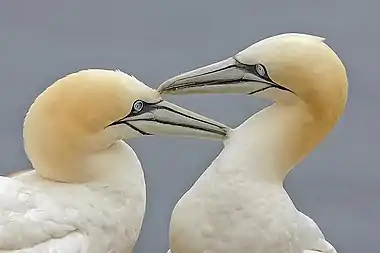
 Photo: Fir0002The Australasian Darter (Anhinga novaehollandiae) is a species of bird in the darter family, which also includes the American, African, and Oriental darters. Darters are also known as snakebirds, which refers to the snake-like appearance of the neck when they swim with their bodies submerged. Australasian Darters are typically found in freshwater or brackish wetlands in Australia, Indonesia, New Zealand, and Papua New Guinea.
 Photo: JJ HarrisonThe Welcome Swallow (Hirundo neoxena) is a small passerine bird in the swallow family found in Australia and nearby islands, including New Zealand. It is about 15 cm (6 in) long, metallic blue-black in colour above, light grey below on the breast and belly, and rusty on the forehead, throat and upper breast.

 Female mallard and ducklings at Burnaby Lake Regional Park
 Female mallard in mid-flight at Flying and gliding animals
 The Fulvous Whistling Duck (Dendrocygna bicolor) is a whistling duck which breeds across the world's tropical regions. It is a common species, growing to about 48–53 cm (19–21 in) long. Its habitat is still freshwater lakes, paddy fields or reservoirs with plentiful vegetation, where it feeds mainly at night on seeds and other parts of plants.
 Rooster at Chicken
 Photograph: JJ HarrisonThe Papuan frogmouth (Podargus papuensis) is the longest bird in the frogmouth family. First described by Jean René Constant Quoy and Joseph Paul Gaimard in 1830, this species is found in subtropical or tropical moist lowland forests in Australia, Indonesia, and Papua New Guinea. This nocturnal bird feeds by hunting for insects, lizards, frogs, and small rodents on the ground.
 Photo: Brocken InagloryA flock of Sanderlings (Calidris alba) at Ocean Beach, San Francisco, US. The species is highly gregarious in winter, sometimes forming large flocks on coastal mudflats or sandy beaches.
 Photo: JJ HarrisonThe Dusky Robin (Melanodryas vittata) is a small passerine bird native to Tasmania. A member of the Australian Robin family, it is not related to European or American Robins. It is a brown-plumaged bird of open woodland, measuring 16–17 cm (6.3–6.7 in) in length.
.jpg.webp)
Selected bird anatomy topic

The eye-ring of a bird is a ring of tiny feathers that surrounds the orbital ring, a ring of bare skin immediately surrounding a bird's eye. The eye-ring is often decorative, and its colour may contrast with adjoining plumage. The ring of feathers is sometimes incomplete, forming an eye arc. In the absence of a conspicuous eye-ring, the orbital ring of a bird is often referred to as the eye-ring.
The bare orbital ring may be hardened or fleshy, or may form an eye-wattle. These are useful field marks in many bird species, and the eye-ringed flatbill, eye-ringed tody-tyrant and eye-ringed thistletail are examples of species named for either of these. (Full article...)Selected species
.jpg.webp)
Did you know
- ...that the hood mockingbird will occasionally attack people in an attempt to get fresh water from them?
- ...that prior to the development of binoculars, bird collections, collections consisting of birds and parts of their anatomy, were the dominant method of bird observation and study among ornithologists?
- ...that bird nests range in size from the tiny one inch high cup of some hummingbirds to the massive five meter high mounds of some dusky scrubfowl?
Categories

Related portals
Things you can do
Create requested articles (WikiProject Birds – Article requests):

|
|
|
|
- Attend to bird articles needing attention
Do these tasks:
|
|
Here are some tasks awaiting attention:
|
More outstanding tasks at the project's cleanup listing, Category:Birds articles needing attention, and Wikipedia:WikiProject Birds/Todo.
Taxonomy of Aves
| Class Aves, divided into superorders, orders, suborders (where indicated), and families. | ||||
|---|---|---|---|---|
|
Associated Wikimedia
The following Wikimedia Foundation sister projects provide more on this subject:
-
 Commons
Free media repository -
 Wikibooks
Free textbooks and manuals -
 Wikidata
Free knowledge base -
 Wikinews
Free-content news -
 Wikiquote
Collection of quotations -
 Wikisource
Free-content library -
 Wikispecies
Directory of species -
 Wikiversity
Free learning tools -
 Wikivoyage
Free travel guide -
 Wiktionary
Dictionary and thesaurus
Sources
- Thompson, C. (2017). The Art of Mindful Birdwatching: Reflections on Freedom & Being. Mindfulness Series. Ivy Press. p. 28. ISBN 978-1-78240-428-6. Retrieved February 7, 2020.
-
 List of all portalsList of all portals
 -
 The arts portal
 -
 Biography portal
 -
 Current events portal
 -
 Geography portal
 -
 History portal
 -
 Mathematics portal
 -
 Science portal
 -
 Society portal
 -
 Technology portal
 -
 Random portalRandom portal
 -
 WikiProject PortalsWikiProject Portals