Portal:Society
The Society Portal
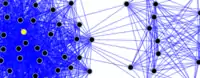
A society is a group of individuals involved in persistent social interaction, or a large social group sharing the same spatial or social territory, typically subject to the same political authority and dominant cultural expectations. Societies are characterized by patterns of relationships (social relations) between individuals who share a distinctive culture and institutions; a given society may be described as the sum total of such relationships among its constituent of members. In the social sciences, a larger society often exhibits stratification or dominance patterns in subgroups.
Societies construct patterns of behavior by deeming certain actions or concepts as acceptable or unacceptable. These patterns of behavior within a given society are known as societal norms. Societies, and their norms, undergo gradual and perpetual changes.
So far as it is collaborative, a society can enable its members to benefit in ways that would otherwise be difficult on an individual basis; both individual and social (common) benefits can thus be distinguished, or in many cases found to overlap. A society can also consist of like-minded people governed by their own norms and values within a dominant, larger society. This is sometimes referred to as a subculture, a term used extensively within criminology, and also applied to distinctive subsections of a larger society.
More broadly, and especially within structuralist thought, a society may be illustrated as an economic, social, industrial or cultural infrastructure, made up of, yet distinct from, a varied collection of individuals. In this regard society can mean the objective relationships people have with the material world and with other people, rather than "other people" beyond the individual and their familiar social environment. (Full article...)
Selected article
Disco Demolition Night was a Major League Baseball (MLB) promotion on Thursday, July 12, 1979, at Comiskey Park in Chicago, Illinois, that ended in a riot. At the climax of the event, a crate filled with disco records was blown up on the field between games of the twi-night doubleheader between the Chicago White Sox and the Detroit Tigers. Many of those in attendance had come to see the explosion rather than the games and rushed onto the field after the detonation. The playing field was so damaged by the explosion and by the fans that the White Sox were required to forfeit the second game to the Tigers.
White Sox officials had hoped for a crowd of 20,000, about 5,000 more than usual. Instead, at least 50,000—including tens of thousands of Dahl's adherents—packed the stadium, and thousands more continued to sneak in after gates were closed. Many of the records were not collected by staff and were thrown like flying discs from the stands. After Dahl blew up the collected records, thousands of fans stormed the field and remained there until dispersed by riot police.
Featured picture
 Credit: Poster: National Prtg. & Engr. Co.; Restoration: PLW
An 1880s poster for Strange Case of Dr Jekyll and Mr Hyde, a novella by Robert Louis Stevenson known for its vivid portrayal of a split personality, wherein within the same person there is both an apparently good and an evil personality, quite distinct from each other. It was a huge success, with over 40,000 copies sold in the first six months after publication.
Did you know...

- ... that despite the presence of a minor basilica (pictured), Plaza Miranda in Manila is a center for fortune-telling and the sale of lucky charms and amulets?
- ... that the exploits of the Polish partisan People's Army were significantly exaggerated by the propaganda of the People's Republic of Poland?
- ... that the writer of The X-Files episode "Per Manum" has described it as being about "the way you perceive connections between people"?
Anniversaries this month

- 5 February 1784 - The Asiatic Society (logo pictured) founder Sir William Jones was elected its president, serving until his death in 1794
- 6 February 1899 - Formation of the American Ceramic Society in Columbus, Ohio by nine members of the National Brick Manufacturer’s Association
- 11 February 1915 - Wlodimir Ledóchowski elected 26th Superior General of the Society of Jesus
- 28 February 2002 - Gulbarg Society massacre took place during the 2002 Gujarat riots, when a mob attacked the Gulbarg Society, a Muslim neighbourhood in Chamanpura, Ahmedabad
Selected quote
Selected biography

 Carl von Linné , was a Swedish botanist, physician, and zoologist, who laid the foundations for the modern scheme of binomial nomenclature. He is known as the father of modern taxonomy, and is also considered one of the fathers of modern ecology. Many of his writings were in Latin, and his name is rendered in Latin as Carolus Linnæus (after 1761 Carolus a Linné). Linnaeus was born in the countryside of Småland, in southern Sweden. Linnaeus received most of his higher education at Uppsala University, and began giving lectures in botany there in 1730. He lived abroad between 1735 and 1738, where he studied and also published a first edition of his Systema Naturae in the Netherlands. He then returned to Sweden, where he became professor of botany at Uppsala. In the 1740s, he was sent on several journeys through Sweden to find and classify plants and animals. In the 1750s and 60s, he continued to collect and classify animals, plants, and minerals, and published several volumes. At the time of his death, he was one of the most acclaimed scientists in Europe. In botany, the author abbreviation used to indicate Linnaeus as the authority for species' names is L. In 1959, Carl Linnaeus was designated as the lectotype for Homo sapiens, which means that following the nomenclatural rules, Homo sapiens was validly defined as the animal species to which Linnaeus belonged. (Full article...)
Featured audio
Categories

|
Society portal Society by continent Society by nationality Sociology Fictional society Anti-social behaviour Business Civil society Clubs and societies Communication Corporate groups Crime Culture Disability Economics Education Social events Family Feminism and society Society in fiction Folklore Health Social history Home Humans Inequality Social institutions Social issues Society-related lists |
Mating systems Matronymics Medicine in society Military Society museums Nationality Organizations Patronymics People Category Philosophy and society not found
Politics Postindustrial society Private law Race and society Religion and society Rural society Science in society Sexuality and society Social change Social media Social responsibility Social sciences Social work Socioeconomics Technology in society Water and society Category Wikipedia books on society not found
Society portals
|
Related portals
Recognized content
Featured articles
 2012 phenomenon
- 1969 Curaçao uprising
- Digital media use and mental health
- Diocletianic Persecution
- W. E. B. Du Bois
- Female genital mutilation
- First homosexual movement
- From the Doctor to My Son Thomas
- Fuck (film)
- Fuck: Word Taboo and Protecting Our First Amendment Liberties
- Growing Up Absurd
- Homo antecessor
- 1981 Irish hunger strike
- Theodora Kroeber
- Solo Man
- Rosewood massacre
- Stonewall riots
- George Washington and slavery
Featured lists
Good articles
 1950s American automobile culture
- Timeline of the Egyptian revolution of 2011
- Acting white
- African Americans in Omaha, Nebraska
- Agriculture
- Alfred Kroeber: A Personal Configuration
- Algorithmic bias
- America's 60 Families
- Anarchism
- Anarchism in Cuba
- Anonymous (hacker group)
- Anti-nuclear movement in Australia
- Anna Apostolaki
- Archaeoastronomy
- Archaeology, Anthropology, and Interstellar Communication
- The Archives of the Planet
- Aroused (film)
- 2008 attacks on Christians in southern Karnataka
- Australopithecus africanus
- Australopithecus afarensis
- Australopithecus bahrelghazali
- Australopithecus deyiremeda
- Australopithecus garhi
- Australopithecus sediba
- Balangoda Man
- Before the Dawn (book)
- Birth control
- Black Lives Matter
- Boerehaat
- The Bog People
- Bomis
- Boston Massacre
- Catilinarian conspiracy
- Cueva de las Manos
- Celebrity Studies
- Child prostitution
- History of Christian thought on persecution and tolerance
- A Community of Witches
- Compulsory Miseducation
- Criminalization of homosexuality
- Cult film
- Culture of the Song dynasty
- Cutting the Mustard
- Hilda Ellis Davidson
- Demographic history of Scotland
- Demographics of the Supreme Court of the United States
- Denisovan
- Deus Ex: Human Revolution
- Diaphoneme
- Diver communications
- Dmanisi hominins
- Double burden
- Dreamtime (book)
- Émile Durkheim
- EST and The Forum in popular culture
- Early European modern humans
- Ely and Littleport riots of 1816
- Extremely online
- Family in the United States
- Feminism
- Feminist economics
- The finger
- First World
- Forensic anthropology
- Fragile Families and Child Wellbeing Study
- Free Expression Policy Project
- Stephen Fuchs
- Genetically modified organism
- Anca Giurchescu
- God's Choice
- Erving Goffman
- Paul Goodman
- Herto Man
- Historiography of the Crusades
- History of agriculture
- Hitachi Magic Wand
- Winifred Hoernlé
- Homo rudolfensis
- Homo ergaster
- Homo habilis
- Homo heidelbergensis
- Homo longi
- Homo luzonensis
- Homo naledi
- Hooray Henry
- Human
- Human interactions with insects
- I Ching
- Globalization and women in China
- Incel
- Ivatan people
- 1968–1969 Japanese university protests
- Java Man
- Jewellery of the Berber cultures
- Joint custody (United States)
- Kenyanthropus
- Kirkbride Plan
- Language
- Lantian Man
- Ralph Larkin
- Lesbian
- Magic, Witchcraft and the Otherworld
- Bronisław Malinowski
- The Man-Eating Myth
- Man of the Hole
- March for Our Lives Portland
- March for Science Portland
- March of loyalty to martyrs
- Karl Marx
- Josef Mengele
- A More Perfect Union: Advancing New American Rights
- Mork Goes Erk
- Mountain Meadows Massacre
- Myth of the clean Wehrmacht
- Native American mascot controversy
- Neanderthal
- New World Order (conspiracy theory)
- No Lifeguard on Duty
- Not My Presidents Day
- Not in Front of the Children
- Observations Made During a Voyage Round the World
- On the Internet, nobody knows you're a dog
- Otaku
- Ovulatory shift hypothesis
- Paranthropus
- Paranthropus aethiopicus
- Paranthropus boisei
- Paranthropus robustus
- Peking Man
- Political party
- Polyethnicity
- Positioning theory
- Potential cultural impact of extraterrestrial contact
- 1956 Poznań protests
- Protests in Canada against the Sri Lankan Civil War
- Proto-globalization
- Rally to Restore Sanity and/or Fear
- Aparna Rao
- A Rape on Campus
- Reborn doll
- Herbert Hope Risley
- The Road to Total Freedom
- Romania in the Early Middle Ages
- Rose Street Club
- Royal intermarriage
- Edward Said
- Sex, Sin, and Blasphemy
- Sheng nu
- Silver
- Simele massacre
- Maria Simon (sociologist)
- Kateryna Skarzhynska
- Slavery in Haiti
- Social identity theory
- Sociology
- Sociology of leisure
- Stay-at-home dad
- Stratford Dialectical and Radical Club
- Tautavel Man
- Team effectiveness
- Tefillin
- Think of the children
- Trance and Dance in Bali
- Truce term
- Max Weber
- Weiquan movement
- Whiskey Rebellion
- Who We Are and How We Got Here
- Benjamin Lee Whorf
- Women's March on Portland
- Yuanmou Man
- Florian Znaniecki
Featured pictures
 20151030 Syrians and Iraq refugees arrive at Skala Sykamias Lesvos Greece 2
 Bertillon, Alphonse, fiche anthropométrique recto-verso
 Cicatrices de flagellation sur un esclave
 DurbanSign1989
%252C_1896.jpg.webp) Frances Benjamin Johnston, Self-Portrait (as "New Woman"), 1896
Frances Benjamin Johnston, Self-Portrait (as "New Woman"), 1896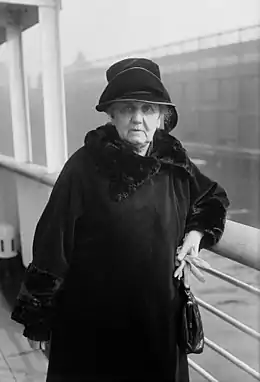 Jane Addams - Bain News Service
 Marine da nang
 SantaCruz-CuevaManos-P2210651b
 United States President Barack Obama bends down to allow the son of a White House staff member to touch his head
 W.E.B. Du Bois by James E. Purdy, 1907
 Xiahe mandible
Things you can do
 |
Here are some tasks awaiting attention:
|
WikiProjects
- Related projects

- Community
- Ethnic groups
- Family and relationships
- Former countries
- Gender Studies
- LGBT studies
- Literature
- Sexology and sexuality
- Sociology
- Travel and Tourism
Web resources
- Definition of Society from the OED.
- Internet Modern History Sourcebook: Industrial Revolution
- "The Day the World Took Off" Six part video series from the University of Cambridge tracing the question "Why did the Industrial Revolution begin when and where it did."
- BBC History Home Page – Industrial Revolution
- National Museum of Science and Industry website – machines and personalities
- Industrial Revolution and the Standard of Living by Clark Nardinelli - the debate over whether standards of living rose or fell.
Associated Wikimedia
-
 List of all portalsList of all portals
 -
 The arts portal
 -
 Biography portal
 -
 Current events portal
 -
 Geography portal
 -
 History portal
 -
 Mathematics portal
 -
 Science portal
 -
 Society portal
 -
 Technology portal
 -
 Random portalRandom portal
 -
 WikiProject PortalsWikiProject Portals
