Portal:Language


Introduction
.jpg.webp)

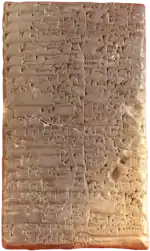

Language is a structured system of communication that consists of grammar and vocabulary. It is the primary means by which humans convey meaning, both in spoken and written forms, and may also be conveyed through sign languages. The vast majority of human languages have developed writing systems that allow for the recording and preservation of the sounds or signs of language. Human language is characterized by its cultural and historical diversity, with significant variations observed between cultures and across time. Human languages possess the properties of productivity and displacement, which enable the creation of an infinite number of sentences, and the ability to refer to objects, events, and ideas that are not immediately present in the discourse. The use of human language relies on social convention and is acquired through learning.
Estimates of the number of human languages in the world vary between 5,000 and 7,000. Precise estimates depend on an arbitrary distinction (dichotomy) established between languages and dialects. Natural languages are spoken, signed, or both; however, any language can be encoded into secondary media using auditory, visual, or tactile stimuli – for example, writing, whistling, signing, or braille. In other words, human language is modality-independent, but written or signed language is the way to inscribe or encode the natural human speech or gestures.
Depending on philosophical perspectives regarding the definition of language and meaning, when used as a general concept, "language" may refer to the cognitive ability to learn and use systems of complex communication, or to describe the set of rules that makes up these systems, or the set of utterances that can be produced from those rules. All languages rely on the process of semiosis to relate signs to particular meanings. Oral, manual and tactile languages contain a phonological system that governs how symbols are used to form sequences known as words or morphemes, and a syntactic system that governs how words and morphemes are combined to form phrases and utterances.
The scientific study of language is called linguistics. Critical examinations of languages, such as philosophy of language, the relationships between language and thought, how words represent experience, etc., have been debated at least since Gorgias and Plato in ancient Greek civilization. Thinkers such as Jean-Jacques Rousseau (1712–1778) have argued that language originated from emotions, while others like Immanuel Kant (1724–1804) have argued that languages originated from rational and logical thought. Twentieth century philosophers such as Ludwig Wittgenstein (1889–1951) argued that philosophy is really the study of language itself. Major figures in contemporary linguistics of these times include Ferdinand de Saussure and Noam Chomsky. (Full article...)
Selected language -
 Nafaanra, some neighbouring languages, and other Senufo languages. |
Nafaanra (sometimes written Nafaara, pronounced [nafãːra]), also known as Nafanan or Nafana, is a Senufo language spoken in northwest Ghana, along the border with Ivory Coast, east of Bondoukou. It is spoken by approximately 90,000 people. Its speakers call themselves Nafana, but others call them Banda or Mfantera. Like other Senufo languages, Nafaanra is a tonal language. It is somewhat of an outlier in the Senufo language group, with the geographically-closest relatives, the Southern Senufo Tagwana–Djimini languages, approximately 200 kilometres (120 mi) to the west, on the other side of Comoé National Park.
The basic word order is subject–object–verb, like Latin and Japanese. Like other Niger–Congo languages, it has a noun class system, with nouns classified according to five different classes, which also affects pronouns, adjectives and copulas. The phonology features a distinction between the length of vowels and whether they are oral or nasal (as in French or Portuguese). There are also three distinct tones, a feature shared with the other Senufo languages. Nafaanra grammar features both tense and aspect which are marked with particles. Numbers are mainly formed by adding cardinal numbers to the number 5 and by multiplying the numbers 10, 20 and 100. (Full article...)Did you know (auto-generated)

- ... that Australia has three major Japanese language schools?
- ... that Edith Kanakaʻole's acceptance speech for a 1978 Na Hoku Hanohano Award was given entirely in the Hawaiian language?
- ... that poet Mary Custis Vezey, an eleventh-generation American, published much of her work in Russian?
- ... that the name of Malaysia's Kalabakan District comes from the words "can eat" in a local language?
- ... that Luis Miguel's duet with Frank Sinatra, "Come Fly with Me", is the only English-language song that he has released to date?
- ... that Charlie N. Holmberg developed the idea for her novel The Paper Magician after studying Japanese and learning about the art of origami?
More did you know -
- ...that a large portion of the vocabulary of the coastal Mozambiquean language Koti derives from a past variety of Swahili?
- ...that the Ambelau, Buru, Kayeli and Lisela people and their Ambelau, Buru, Kayeli and Lisela languages are unique to the Indonesian islands of Buru and Ambelau?
- ...that the Korean dialect spoken by ethnic Koreans in Japan has changed so much that some of its speakers don't think it can be properly referred to as "Korean" anymore?
- ...that the National Language Authority in Pakistan is the first autonomous regulatory institution to have internationally standardized the Urdu language code table and Urdu keyboard for typewriters, teleprinters, and computer software?
Categories
Linguistics: Computational linguistics • Grammar • Historical linguistics • Morphology • Phonetics • Phonology • Pragmatics • Reading • Semantics • Sociolinguistics • Syntax • Writing
Languages: Language families • Pidgins and creoles • Sign languages
Linguists: By nationality • Historical linguists • Morphologists • Phoneticians • Phonologists • Sociolinguists • Syntacticians • Translators
Stubs: Constructed languages • Languages • Linguists • Pidgins and creoles • Typography • Vocabulary and usage • Writing systems
Full Language category tree |
|---|
|
Select [►] to view subcategories
Language Languages Outlines of languages Language acquisition Language-related awards Language competitions Natural language and computing Language in fiction Language games Gender in language Language identifiers Language interpretation Language comparison Language reform Linguistics Language mechanics Language and mysticism Oral communication Philology Philosophy of language Language policy Self-reference Sign language Sociology of language Language software Speech Speech and language pathology Statements Terminology Vocabulary Works about language Writing Language stubs |
Related portals
Selected topic -
 Otomi-speaking areas in Mexico |
Otomi (/ˌoʊtəˈmiː/; Spanish: Otomí [otoˈmi]) is an Oto-Pamean language family spoken by approximately 240,000 indigenous Otomi people in the central altiplano region of Mexico. Otomi consists of several closely related languages, many of which are not mutually intelligible. The word Hñähñu [hɲɑ̃hɲṹ] has been proposed as an endonym, but since it represents the usage of a single dialect, it has not gained wide currency. Linguists have classified the modern dialects into three dialect areas: the Northwestern dialects are spoken in Querétaro, Hidalgo and Guanajuato; the Southwestern dialects are spoken in the State of Mexico; and the Eastern dialects are spoken in the highlands of Veracruz, Puebla, and eastern Hidalgo and villages in Tlaxcala and Mexico states.
Like all other Oto-Manguean languages, Otomi is a tonal language, and most varieties distinguish three tones. Nouns are marked only for possessor; the plural number is marked with a definite article and a verbal suffix, and some dialects keep dual number marking. There is no case marking. Verb morphology is either fusional or agglutinating depending on the analysis. In verb inflection, infixation, consonant mutation, and apocope are prominent processes. The number of irregular verbs is large. A class of morphemes cross-references the grammatical subject in a sentence. These morphemes can be analysed as either proclitics or prefixes and marks for tense, aspect and mood. Verbs are inflected for either direct object or dative object (but not for both simultaneously) by suffixes. Grammar also distinguishes between inclusive 'we' and exclusive 'we'. (Full article...)Selected picture -

The Rosetta Stone is an ancient Egyptian granodiorite stele inscribed with a decree issued at Memphis in 196 BC on behalf of King Ptolemy V. The decree appears in three scripts: the upper text is Ancient Egyptian hieroglyphs, the middle portion Demotic script, and the lowest Ancient Greek.
Language News
- 28 September 2022 – Anglophone crisis
- Authorities in Cameroon ban "undeclared meetings and manifestations" in Bamenda, the capital of the Northwest Region, after separatists announced a manifestation to commemorate the declaration of independence of Ambazonia, a breakaway state consisting of the English-speaking regions of Cameroon. (Xinhua)
Topics

Languages of Africa: Arabic, Chadic, Cushitic, Kanuri, Maasai, Setswana, Swahili, Turkana, Xhosa, Yoruba, Zulu, more...
Languages of the Americas: Aleut, Carib, Cherokee, Inuktitut, Iroquois, Kootenai, Mayan, Nahuatl, Navajo, Quechuan, Salish, American Sign Language, more...
Languages of Asia: Arabic, Assamese, Balochi, Bengali, Chinese, Japanese, Hajong, Hebrew, Hindustani, Kannada, Kokborok, Marathi, Khasi, Korean, Kurdish, Malayalam, Manipuri, Meithei, Mongolian, Persian, Rajasthani, Sindhi, Sanskrit, Sylheti, Tamil, Tanchangya, Tulu, Telugu, Tibetan, Thai, Turkish, Vietnamese, Khowar, more...
Languages of Austronesia: Austric, Fijian, Hawaiian, Javanese, Malagasy, Malay, Maori, Marshallese, Samoan, Tahitian, Tagalog, Tongan, Auslan, more...
Languages of Europe: Basque, Czech, Danish, Dutch, English (book), French, German, Greek, Italian, Latin, Leonese, Norwegian, Polish, Portuguese, Romanian, Russian, Slovak, Spanish, Ukrainian more...
Constructed languages: Esperanto, Ido, Volapük, more...
Agglutinative language, Analytic language, Constructed language, Creole, Context-free language, Extinct language, Dialect, Fusional language, Inflectional language, International language, Isolating language, Language isolate, National language, Natural language, Pidgin, Pluricentric language, Polysynthetic language, Proto-language, Sign language, Spoken language, Synthetic language, Variety (linguistics)

Applied linguistics, Cognitive linguistics, Accent (dialect), Computational linguistics, Descriptive linguistics, Eurolinguistics, Generative linguistics, Historical linguistics, Lexicology, Lexical semantics, Morphology, Onomasiology, Phonetics, Phonology, Pragmatics, Prescription, Prototype semantics, Psycholinguistics, Semantics, Stylistics, Sociolinguistics, Syntax
See also: List of linguists

Alphabets: Arabic alphabet, Bengali alphabet, Cyrillic alphabet, Hebrew alphabet, Latin alphabet, more...
Other writing systems: Abjad, Abugida, Braille, Hieroglyphics, Logogram, Syllabary, SignWriting, more..
See also: History of the alphabet, Script
Associated Wikimedia
The following Wikimedia Foundation sister projects provide more on this subject:
-
 Commons
Free media repository -
 Wikibooks
Free textbooks and manuals -
 Wikidata
Free knowledge base -
 Wikinews
Free-content news -
 Wikiquote
Collection of quotations -
 Wikisource
Free-content library -
 Wikiversity
Free learning tools -
 Wiktionary
Dictionary and thesaurus
Find a language
| Enter an ISO 639 code to find the corresponding language article |
-
 List of all portalsList of all portals
 -
 The arts portal
 -
 Biography portal
 -
 Current events portal
 -
 Geography portal
 -
 History portal
 -
 Mathematics portal
 -
 Science portal
 -
 Society portal
 -
 Technology portal
 -
 Random portalRandom portal
 -
 WikiProject PortalsWikiProject Portals