Portal:Law

The Law Portal

Lady Justice, often used as a personification of the law, holding a sword in one hand and scales in the other.

Law is a set of rules that are created and are enforceable by social or governmental institutions to regulate behavior, with its precise definition a matter of longstanding debate. It has been variously described as a science and as the art of justice. State-enforced laws can be made by a group legislature or by a single legislator, resulting in statutes; by the executive through decrees and regulations; or established by judges through precedent, usually in common law jurisdictions. Private individuals may create legally binding contracts, including arbitration agreements that adopt alternative ways of resolving disputes to standard court litigation. The creation of laws themselves may be influenced by a constitution, written or tacit, and the rights encoded therein. The law shapes politics, economics, history and society in various ways and also serves as a mediator of relations between people.

Legal systems vary between jurisdictions, with their differences analysed in comparative law. In civil law jurisdictions, a legislature or other central body codifies and consolidates the law. In common law systems, judges may make binding case law through precedent, although on occasion this may be overturned by a higher court or the legislature. Historically, religious law has influenced secular matters and is, as of the 21st century, still in use in some religious communities. Sharia law based on Islamic principles is used as the primary legal system in several countries, including Iran and Saudi Arabia.

The scope of law can be divided into two domains. Public law concerns government and society, including constitutional law, administrative law, and criminal law. Private law deals with legal disputes between individuals and/or organisations in areas such as contracts, property, torts/delicts and commercial law. This distinction is stronger in civil law countries, particularly those with a separate system of administrative courts; by contrast, the public-private law divide is less pronounced in common law jurisdictions. (Full article...)

Selected article

The Court of Common Pleas, or Common Bench, was a common law court in the English legal system that covered "common pleas"; actions between subject and subject, which did not concern the king. Created in the late 12th to early 13th century after splitting from the Exchequer of Pleas, the Common Pleas served as one of the central English courts for around 600 years. Authorised by Magna Carta to sit in a fixed location, the Common Pleas sat in Westminster Hall for its entire existence, joined by the Exchequer of Pleas and Court of King's Bench.

The court's jurisdiction was gradually undercut by the King's Bench and Exchequer of Pleas with legal fictions, the Bill of Middlesex and Writ of Quominus respectively. The Common Pleas maintained its exclusive jurisdiction over matters of real property until its dissolution, and due to its wide remit was considered by Sir Edward Coke to be the "lock and key of the common law". It was staffed by one Chief Justice and a varying number of puisne justices, who were required to be Serjeants-at-Law, and until the mid 19th century only Serjeants were allowed to plead there. (Full article...)

Selected biography

Charles Edward Magoon (December 5, 1861 – January 14, 1920) was an American lawyer, judge, diplomat, and administrator who is best remembered as a governor of the Panama Canal Zone; he also served as Minister to Panama at the same time. His successes led to his appointment as an occupation governor of Cuba in 1906. He was the subject of several scandals during his career. As a legal advisor working for the United States Department of War, he drafted recommendations and reports that were used by Congress and the executive branch in governing the United States' new territories following the Spanish–American War. These reports were collected as a published book in 1902, then considered the seminal work on the subject. During his time as a governor, Magoon worked to put these recommendations into practice. In summary: Magoon was hugely successful in Panama but criticized for his tenure in Cuba. (Full article...)

Selected statute

A statute is a formal written enactment of a legislative authority that governs the legal entities of a city, state, or country by way of consent. Typically, statutes command or prohibit something, or declare policy. Statutes are rules made by legislative bodies; they are distinguished from case law or precedent, which is decided by courts, and regulations issued by government agencies. (Full article...)


The Laws of the Twelve Tables was the legislation that stood at the foundation of Roman law. Formally promulgated in 449 BC, the Tables consolidated earlier traditions into an enduring set of laws.

In the Forum, "The Twelve Tables" stated the rights and duties of the Roman citizen. Their formulation was the result of considerable agitation by the plebeian class, who had hitherto been excluded from the higher benefits of the Republic. The law had previously been unwritten and exclusively interpreted by upper-class priests, the pontifices. Something of the regard with which later Romans came to view the Twelve Tables is captured in the remark of Cicero (106–43 BC) that the "Twelve Tables...seems to me, assuredly to surpass the libraries of all the philosophers, both in weight of authority, and in plenitude of utility". Cicero scarcely exaggerated; the Twelve Tables formed the basis of Roman law for a thousand years.

The Twelve Tables are sufficiently comprehensive that their substance has been described as a 'code', although modern scholars consider this characterization exaggerated. The Tables are a sequence of definitions of various private rights and procedures. They generally took for granted such things as the institutions of the family and various rituals for formal transactions. The provisions were often highly specific and diverse. (Full article...)

Did you know...

  • ... that the non-payment of debts is the archetype for the seventeen other Hindu titles of law, including that of sexual crimes against women?

Selected images

Selected case

Case law, also used interchangeably with common law, is law that is based on precedents, that is the judicial decisions from previous cases, rather than law based on constitutions, statutes, or regulations. Case law uses the detailed facts of a legal case that have been resolved by courts or similar tribunals. These past decisions are called "case law", or precedent. Stare decisis—a Latin phrase meaning "let the decision stand"—is the principle by which judges are bound to such past decisions, drawing on established judicial authority to formulate their positions. (Full article...)


Jones v Kaney [2011] UKSC 13 is a 2011 decision of the Supreme Court of the United Kingdom on whether expert witnesses retained by a party in litigation can be sued for professional negligence in England and Wales, or whether they have the benefit of immunity from suit. The case involved a psychologist (Kaney) instructed as an expert witness in a personal injury claim, who was said to have negligently signed a statement of matters agreed with the expert instructed by the opposing side, in which she made a number of concessions that weakened the claim considerably. As a result, according to the injured claimant (Jones), he had to settle the claim for much less than he would have obtained had his expert not been careless. To succeed in the claim, he had to overturn an earlier Court of Appeal decision that had decided that preparation of a joint statement with the other side's expert was covered by immunity from suit. Kaney therefore succeeded in getting the claim struck out before trial on an application heard by Mr Justice Blake in the High Court of Justice. The judge issued a certificate allowing the claimant to "leapfrog" the Court of Appeal and go straight to the Supreme Court to appeal against his decision.

The Supreme Court, by a majority of five to two, decided that expert witnesses were not immune in the law of England and Wales from claims in tort or contract for matters connected with their participation in legal proceedings. This reversed a line of authority dating back 400 years. The case considered the narrow issue, namely whether preparation of a joint statement by experts was immune from suit, and the wider public policy issue of whether litigants should be able to sue experts that they had instructed for breach of duty. There was discussion about whether removing the immunity would have a "chilling effect" on the willingness of experts to participate in court proceedings, although judges on both sides of the decision agreed that there was no empirical evidence on the point. Lord Phillips, a member of the majority, compared the situation of expert witnesses with that of advocates, on the basis that both owed duties to clients and to the court. Advocates' immunity from claims in negligence had been removed in 2001 in Hall v Simons. The change, he said, had not led to an increase in vexatious claims or a reduction in the performance of duties owed by advocates to the court. Lord Hope, in the minority, said that experts and advocates had different functions and so disagreed with the comparison. He also pointed out that English law would now be different from Scots law on this issue. (Full article...)

More Did you know (auto-generated)

Wikinews Crime and law portal

General images

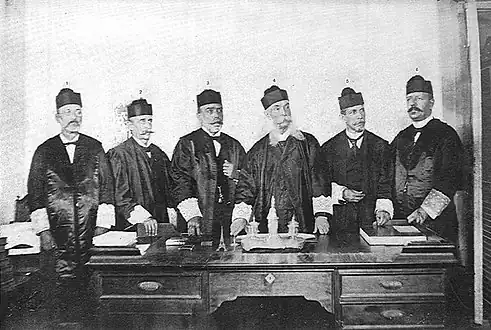
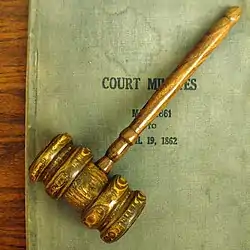
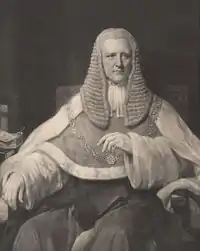
The following are images from various law-related articles on Wikipedia.

Topics

Quality content

Extended content
Featured articles
Featured lists
Did you know? articles
Featured portals
In the News articles
Main page featured articles
Main page featured lists
Good articles

For a list of good articles on legal topics, see here.

Subcategories

Law
Law by forum
Law by issue
Law by region
Law by time
Law by type
Law-related lists
Outlines of laws and legal topics
Acts related to organized crime
Case law
Comparative law
Feminism and law
Glossaries of law
Government commissions
Judicial cooperation
Jurisprudence
Legal aspects of death
Legal awards
Legal communication
Legal disputes
Legal education
Legal events
Legal interpretation
Legal organizations
Legal research
Legal systems
Legal terminology
Masks in law
Memory laws
People by legal status
Philosophy of law
Practice of law
Private law
Promulgation
Religion and law
Rights
Science and law
Set index articles on law
Sociology of law
Sources of law
Standardized tests for Law
Tattooing and law
Works about law
Law stubs

WikiProjects

Related WikiProjects
  • WikiProject Law
  • WikiProject Australian law
  • WikiProject Canadian law
  • Canon law Task Force
  • WikiProject Correction and Detention Facilities
  • WikiProject Crime and Criminal Biography
  • WikiProject FBI
  • WikiProject Human rights
  • WikiProject International law
  • WikiProject Law Enforcement
  • WikiProject Taxation
  • WikiProject U.S. Supreme Court cases
  • WikiProject U.S. courts and judges

What are WikiProjects?

Things you can do...

  • Help out with the WikiProject Law's list of tasks
  • Expand a stub article about law
  • Write a new article about a legal topic, case or person – see the list of requested law articles

Associated Wikimedia

The following Wikimedia Foundation sister projects provide more on this subject:

Discover Wikipedia using portals
This article is issued from Wikipedia. The text is licensed under Creative Commons - Attribution - Sharealike. Additional terms may apply for the media files.