Portal:Plants

The Plants Portal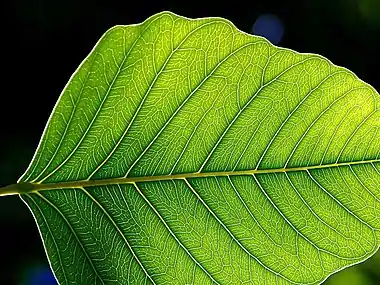 The leaf is usually the primary site of photosynthesis in plants. Plants are predominantly photosynthetic eukaryotes of the kingdom Plantae. Historically, the plant kingdom encompassed all living things that were not animals, and included algae and fungi; however, all current definitions of Plantae exclude the fungi and some algae, as well as the prokaryotes (the archaea and bacteria). By one definition, plants form the clade Viridiplantae (Latin name for "green plants") which is sister of the Glaucophyta, and consists of the green algae and Embryophyta (land plants). The latter includes the flowering plants, conifers and other gymnosperms, ferns and their allies, hornworts, liverworts, and mosses. There are about 320,000 known species of plants, of which the great majority, some 260,000–290,000, produce seeds. Green plants provide a substantial proportion of the world's molecular oxygen, and are the basis of most of Earth's ecosystems. Plants that produce grain, fruit, and vegetables also form basic human foods and have been domesticated for millennia. Plants have many cultural and other uses, as ornaments, building materials, writing material and, in great variety, they have been the source of medicines and psychoactive drugs. The scientific study of plants is known as botany, a branch of biology. (Full article...)
| ||||||||||||||||||||||||||||||||||||||||||||||||||||||||||||||||||||||||||


 Darwin, c. 1854, when he was preparing On the Origin of Species for publication |
Charles Robert Darwin FRS FRGS FLS FZS JP (/ˈdɑːrwɪn/ DAR-win; 12 February 1809 – 19 April 1882) was an English naturalist, geologist, and biologist, widely known for his contributions to evolutionary biology. His proposition that all species of life have descended from a common ancestor is now generally accepted and considered a fundamental concept in science. In a joint publication with Alfred Russel Wallace, he introduced his scientific theory that this branching pattern of evolution resulted from a process he called natural selection, in which the struggle for existence has a similar effect to the artificial selection involved in selective breeding. Darwin has been described as one of the most influential figures in human history and was honoured by burial in Westminster Abbey.
Darwin's early interest in nature led him to neglect his medical education at the University of Edinburgh; instead, he helped to investigate marine invertebrates. His studies at the University of Cambridge's Christ's College from 1828 to 1831 encouraged his passion for natural science. His five-year voyage on HMS Beagle from 1831 to 1836 established Darwin as an eminent geologist whose observations and theories supported Charles Lyell's concept of gradual geological change. Publication of his journal of the voyage made Darwin famous as a popular author. (Full article...)

 Banksia canei inflorescence |
Banksia canei, commonly known as the mountain banksia, is a species of shrub that is endemic to southeastern Australia. It is generally encountered as a many-branched shrub that grows up to 3 m (10 ft) high, with narrow leaves and the yellow inflorescences (flower spikes) appearing from late summer to early winter. The old flowers fall off the spikes and up to 150 finely furred follicles develop, which remain closed until burnt in a bushfire. Each follicle bears two winged seeds. Response to fire is poorly known, although it is thought to regenerate by seed. Birds such as the yellow-tufted honeyeater and various insects forage among the flower spikes. It is frost tolerant in cultivation, but copes less well with aridity or humidity and is often short-lived in gardens. One cultivar, Banksia 'Celia Rosser', was registered in 1978, but has subsequently vanished.
Although no subspecies are recognised, four topodemes (geographically isolated populations) have been described, as there is significant variation in the shape of both adult and juvenile leaves between populations. Although superficially resembling B. marginata, it is more closely related to another subalpine species, B. saxicola. (Full article...)
 Several plants in cultivation |
Drosera regia, commonly known as the king sundew, is a carnivorous plant in the sundew genus Drosera that is endemic to a single valley in South Africa. The genus name Drosera comes from the Greek word droseros, meaning "dew-covered". The specific epithet regia is derived from the Latin for "royal", a reference to the "striking appearance" of the species. Individual leaves can reach 70 cm (28 in) in length. It has many unusual relict characteristics not found in most other Drosera species, including woody rhizomes, operculate pollen, and the lack of circinate vernation in scape growth. All of these factors, combined with molecular data from phylogenetic analysis, contribute to the evidence that D. regia possesses some of the most ancient characteristics within the genus. Some of these are shared with the related Venus flytrap (Dionaea muscipula), which suggests a close evolutionary relationship.
The tentacle-covered leaves can capture large prey, such as beetles, moths, and butterflies. The tentacles of all Drosera species have special stalked glands on the leaf's upper surface that produce a sticky mucilage. The leaves are considered active flypaper traps that respond to captured prey by bending to surround it. In its native fynbos habitat, the plants compete for space with native marsh grasses and low evergreen shrubs. Of the two known populations of D. regia, the higher altitude site appears to be overgrown and is essentially extirpated. The lower altitude site is estimated to have about 50 mature plants, making it the most endangered Drosera species, since it is threatened with extinction in the wild. It is often cultivated by carnivorous plant enthusiasts, and a single cultivar has been registered. (Full article...)
 'Blue Spire' cultivar |
Salvia yangii, previously known as Perovskia atriplicifolia (/pəˈrɒvskiə ætrɪplɪsɪˈfoʊliə/), and commonly called Russian sage, is a flowering herbaceous perennial plant and subshrub. Although not previously a member of Salvia, the genus widely known as sage, since 2017 it has been included within them. It has an upright habit, typically reaching 0.5–1.2 metres (1+1⁄2–4 feet) tall, with square stems and gray-green leaves that yield a distinctive odor when crushed. It is best known for its flowers. Its flowering season extends from mid-summer to late October, with blue to violet blossoms arranged into showy, branched panicles.
It is native to the steppes and hills of southwestern and central Asia. Successful over a wide range of climate and soil conditions, it has since become popular and widely planted. Several cultivars have been developed, differing primarily in leaf shape and overall height; 'Blue Spire' is the most common. This variation has been widely used in gardens and landscaping. S. yangii was the Perennial Plant Association's 1995 Plant of the Year, and the 'Blue Spire' cultivar received the Award of Garden Merit from the Royal Horticultural Society. (Full article...)
While at the bookshop, he was offered a position as a librarian at the Royal Horticultural Society in London (1933–1952). From there he moved to the Natural History Museum as a scientific officer in the botany department (1952–1976). After his retirement, he continued working there, writing, and serving on a number of professional bodies related to his work, including the Linnean Society, of which he became president. He also taught botany at Cambridge University as a visiting professor (1977–1983). (Full article...)
 The title page of the 1877 edition of Fertilisation of Orchids |
Fertilisation of Orchids is a book by English naturalist Charles Darwin published on 15 May 1862 under the full explanatory title On the Various Contrivances by Which British and Foreign Orchids Are Fertilised by Insects, and On the Good Effects of Intercrossing. Darwin's previous book, On the Origin of Species, had briefly mentioned evolutionary interactions between insects and the plants they fertilised, and this new idea was explored in detail. Field studies and practical scientific investigations that were initially a recreation for Darwin—a relief from the drudgery of writing—developed into enjoyable and challenging experiments. Aided in his work by his family, friends, and a wide circle of correspondents across Britain and worldwide, Darwin tapped into the contemporary vogue for growing exotic orchids.
The book was his first detailed demonstration of the power of natural selection, and explained how complex ecological relationships resulted in the coevolution of orchids and insects. The view has been expressed that the book led directly or indirectly to all modern work on coevolution and the evolution of extreme specialisation. It influenced botanists, and revived interest in the neglected idea that insects played a part in pollinating flowers. It opened up the new study areas of pollination research and reproductive ecology, directly related to Darwin's ideas on evolution, and supported his view that natural selection led to a variety of forms through the important benefits achieved by cross-fertilisation. Although the general public showed less interest and sales of the book were low, it established Darwin as a leading botanist. Orchids was the first in a series of books on his innovative investigations into plants. (Full article...)
 A specimen at The Domain, Sydney, planted in 1850 |
Ficus macrophylla, commonly known as the Moreton Bay fig or Australian banyan, is a large evergreen banyan tree of the family Moraceae native to eastern Australia, from the Wide Bay–Burnett region in the north to the Illawarra in New South Wales, as well as Lord Howe Island. Its common name is derived from Moreton Bay in Queensland, Australia. It is best known for its imposing buttress roots.
Ficus macrophylla is called a strangler fig because seed germination usually takes place in the canopy of a host tree, where the seedling lives as an epiphyte until its roots establish contact with the ground, when it enlarges and strangles its host, eventually becoming a freestanding tree by itself. Individuals may reach 60 m (200 ft) in height. Like all figs, it has an obligate mutualism with fig wasps; figs are pollinated only by fig wasps, and fig wasps can reproduce only in fig flowers. Many species of birds, including pigeons, parrots, and various passerines, eat the fruit. (Full article...)
_shown_in_her_laboratory_in_1947.jpg.webp) McClintock in 1947 within her laboratory |
Barbara McClintock (June 16, 1902 – September 2, 1992) was an American scientist and cytogeneticist who was awarded the 1983 Nobel Prize in Physiology or Medicine. McClintock received her PhD in botany from Cornell University in 1927. There she started her career as the leader of the development of maize cytogenetics, the focus of her research for the rest of her life. From the late 1920s, McClintock studied chromosomes and how they change during reproduction in maize. She developed the technique for visualizing maize chromosomes and used microscopic analysis to demonstrate many fundamental genetic ideas. One of those ideas was the notion of genetic recombination by crossing-over during meiosis—a mechanism by which chromosomes exchange information. She produced the first genetic map for maize, linking regions of the chromosome to physical traits. She demonstrated the role of the telomere and centromere, regions of the chromosome that are important in the conservation of genetic information. She was recognized as among the best in the field, awarded prestigious fellowships, and elected a member of the National Academy of Sciences in 1944.
During the 1940s and 1950s, McClintock discovered transposition and used it to demonstrate that genes are responsible for turning physical characteristics on and off. She developed theories to explain the suppression and expression of genetic information from one generation of maize plants to the next. Due to skepticism of her research and its implications, she stopped publishing her data in 1953. (Full article...)
.jpg.webp) Flowers emerging from base of cone |
Isopogon anethifolius, commonly known as narrow-leaf drumsticks or narrow-leafed drumsticks, is a shrub in the family Proteaceae. The species is found only in coastal areas near Sydney in New South Wales, and to the immediate west. It occurs naturally in woodland, open forest and heathland on sandstone soils. An upright shrub, it can reach to 3 m (9.8 ft) in height, with terete leaves that are divided and narrow. The yellow flowers appear in the Spring, from September to December, and are prominently displayed. They are followed by round grey cones, which give the plant its common name of drumsticks. The small hairy seeds are found in the old flower parts.
Isopogon anethifolius regenerates after bushfire by resprouting from its woody base, known as a lignotuber, as well as from seed. It was described by Richard Salisbury in 1796, and was first grown in the United Kingdom the same year. One of the easiest members of the genus Isopogon to grow in cultivation, I. anethifolius grows readily in the garden if located in a sunny or part-shaded spot with sandy soil and good drainage. (Full article...)

Persoonia lanceolata, commonly known as lance-leaf geebung, is a shrub native to New South Wales in eastern Australia. It reaches 3 m (10 ft) in height and has smooth grey bark and bright green foliage. Its small yellow flowers grow on racemes and appear in the austral summer and autumn (January to April), followed by green fleshy fruits (known as drupes) which ripen the following spring (September to October). Within the genus Persoonia, P. lanceolata belongs to the lanceolata group of 58 closely related species. It interbreeds with several other species found in its range.
The species is usually found in dry sclerophyll forest on sandstone-based nutrient-deficient soil. It has adapted to a fire-prone environment; plants lost in bushfires can regenerate through a ground-stored seed bank. Seedlings mostly germinate within two years of fires. Several species of native bee of the genus Leioproctus pollinate the flowers. Swamp wallabies are a main consumer of its fruit, and the seeds are spread in wallaby faeces. Its lifespan ranges from 25 to 60 years, though difficulties in propagation have seen low cultivation rates. (Full article...)

Banksia lemanniana, the yellow lantern banksia or Lemann's banksia, is a species of flowering plant in the family Proteaceae, native to Western Australia. It generally grows as an open woody shrub or small tree to 5 m (16 ft) high, with stiff serrated leaves and unusual hanging inflorescences. Flowering occurs over summer, the greenish buds developing into oval flower spikes before turning grey and developing the characteristic large woody follicles. It occurs within and just east of the Fitzgerald River National Park on the southern coast of the state. B. lemanniana is killed by bushfire and regenerates from seed.
Described by Swiss botanist Carl Meissner in 1856, Banksia lemanniana was named in honour of English botanist Charles Morgan Lemann. It is one of three or four related species all with pendent inflorescences, which is an unusual feature of banksias. No subspecies are recognised. Banksia lemanniana is classified as Not Threatened under the Wildlife Conservation Act of Western Australia. Unlike many Western Australian banksias, it appears to have some resistance to dieback from the soil-borne water mould Phytophthora cinnamomi, and is one of the easier Western Australian species to grow in cultivation. (Full article...)
 B. attenuata, Margaret River |
Banksia attenuata, commonly known as the candlestick banksia, slender banksia, or biara to the Noongar people, is a species of plant in the family Proteaceae. Commonly a tree, it reaches 10 m (33 ft) high, but it is often a shrub in drier areas 0.4 to 2 m (1.3 to 6.6 ft) high. It has long, narrow, serrated leaves and bright yellow inflorescences, or flower spikes, held above the foliage, which appear in spring and summer. The flower spikes age to grey and swell with the development of the woody follicles. The candlestick banksia is found across much of the southwest of Western Australia, from north of Kalbarri National Park down to Cape Leeuwin and across to Fitzgerald River National Park.
English botanist John Lindley had named material collected by Australian botanist James Drummond Banksia cylindrostachya in 1840, but this proved to be the same as the species named Banksia attenuata by Scottish botanist Robert Brown 30 years earlier in 1810, and thus Brown's name took precedence. Within the genus Banksia, the close relationships and exact position of B. attenuata is unclear. (Full article...)
Selected articles -
.jpg.webp) The Botanical Magazine, 1845 title page
The Botanical Magazine, 1845 title page
The Botanical Magazine; or Flower-Garden Displayed, is an illustrated publication which began in 1787. The longest running botanical magazine, it is widely referred to by the subsequent name Curtis's Botanical Magazine.
Each of the issues contains a description, in formal yet accessible language, and is renowned for featuring the work of two centuries of botanical illustrators. Many plants received their first publication on the pages, and the description given was enhanced by the keenly detailed illustrations. (Full article...)- Evolutionary developmental biology (evo-devo) is the study of developmental programs and patterns from an evolutionary perspective. It seeks to understand the various influences shaping the form and nature of life on the planet. Evo-devo arose as a separate branch of science rather recently. An early sign of this occurred in 1999.
Most of the synthesis in evo-devo has been in the field of animal evolution, one reason being the presence of model systems like Drosophila melanogaster, C. elegans, zebrafish and Xenopus laevis. However, since 1980, a wealth of information on plant morphology, coupled with modern molecular techniques has helped shed light on the conserved and unique developmental patterns in the plant kingdom also. (Full article...)  The ethnobotanist Richard Evans Schultes at work in the Amazon (~1940s)
Ethnobotany is the study of a region's plants and their practical uses through the traditional knowledge of a local culture and people. An ethnobotanist thus strives to document the local customs involving the practical uses of local flora for many aspects of life, such as plants as medicines, foods, intoxicants and clothing. Richard Evans Schultes, often referred to as the "father of ethnobotany", explained the discipline in this way:Ethnobotany simply means ... investigating plants used by societies in various parts of the world.
Since the time of Schultes, the field of ethnobotany has grown from simply acquiring ethnobotanical knowledge to that of applying it to a modern society, primarily in the form of pharmaceuticals. Intellectual property rights and benefit-sharing arrangements are important issues in ethnobotany. (Full article...) Carl Linnaeus's garden at Uppsala, Sweden
The International Code of Nomenclature for algae, fungi, and plants (ICN or ICNafp) is the set of rules and recommendations dealing with the formal botanical names that are given to plants, fungi and a few other groups of organisms, all those "traditionally treated as algae, fungi, or plants". It was formerly called the International Code of Botanical Nomenclature (ICBN); the name was changed at the International Botanical Congress in Melbourne in July 2011 as part of the Melbourne Code which replaced the Vienna Code of 2005.
The current version of the code is the Shenzhen Code adopted by the International Botanical Congress held in Shenzhen, China, in July 2017. As with previous codes, it took effect as soon as it was ratified by the congress (on 29 July 2017), but the documentation of the code in its final form was not published until 26 June 2018. (Full article...) Diversity of angiosperms
Flowering plants are plants that bear flowers and fruits, and form the clade Angiospermae (/ˌændʒiəˈspɜːrmiː/), commonly called angiosperms. The term "angiosperm" is derived from the Greek words ἀγγεῖον/angeion ('container, vessel') and σπέρμα/sperma ('seed'), and refers to those plants that produce their seeds enclosed within a fruit. They are by far the most diverse group of land plants with 64 orders, 416 families, approximately 13,000 known genera and 300,000 known species. Angiosperms were formerly called Magnoliophyta (/mæɡˌnoʊliˈɒfətə, -əˈfaɪtə/).
Like gymnosperms, angiosperms are seed-producing plants. They are distinguished from gymnosperms by characteristics including flowers, endosperm within their seeds, and the production of fruits that contain the seeds. (Full article...) An ethylene signal transduction pathway. Ethylene permeates the cell membrane and binds to a receptor on the endoplasmic reticulum. The receptor releases the repressed EIN2. This then activates a signal transduction pathway which activates regulatory genes that eventually trigger an ethylene response. The activated DNA is transcribed into mRNA which is then translated into a functional enzyme that is used for ethylene biosynthesis.
Ethylene (CH
2=CH
2) is an unsaturated hydrocarbon gas (alkene) acting naturally as a plant hormone. It is the simplest alkene gas and is the first gas known to act as hormone. It acts at trace levels throughout the life of the plant by stimulating or regulating the ripening of fruit, the opening of flowers, the abscission (or shedding) of leaves and, in aquatic and semi-aquatic species, promoting the 'escape' from submergence by means of rapid elongation of stems or leaves. This escape response is particularly important in rice farming. Commercial fruit-ripening rooms use "catalytic generators" to make ethylene gas from a liquid supply of ethanol. Typically, a gassing level of 500 to 2,000 ppm is used, for 24 to 48 hours. Care must be taken to control carbon dioxide levels in ripening rooms when gassing, as high temperature ripening (20 °C; 68 °F) has been seen to produce CO2 levels of 10% in 24 hours. (Full article...) An antique selection of herbal medicines
Herbal medicine (also herbalism) is the study of pharmacognosy and the use of medicinal plants, which are a basis of traditional medicine. With worldwide research into pharmacology, some herbal medicines have been translated into modern remedies, such as the anti-malarial group of drugs called artemisinin isolated from Artemisia annua, a herb that was known in Chinese medicine to treat fever. There is limited scientific evidence for the safety and efficacy of plants used in 21st century herbalism, which generally does not provide standards for purity or dosage. The scope of herbal medicine commonly includes fungal and bee products, as well as minerals, shells and certain animal parts. Herbal medicine is also called phytomedicine or phytotherapy.
Paraherbalism describes alternative and pseudoscientific practices of using unrefined plant or animal extracts as unproven medicines or health-promoting agents. Paraherbalism relies on the belief that preserving various substances from a given source with less processing is safer or more effective than manufactured products, a concept for which there is no evidence. (Full article...) The Chinese character for hemp (麻 or má) depicts two plants under a shelter. Cannabis cultivation dates back at least 3000 years in Taiwan.
The history of cannabis and its usage by humans dates back to at least the third millennium BC in written history, and possibly as far back as the Pre-Pottery Neolithic B (8800–6500 BCE) based on archaeological evidence. For millennia, the plant has been valued for its use for fiber and rope, as food and medicine, and for its psychoactive properties for religious and recreational use.
The earliest restrictions on cannabis were reported in the Islamic world by the 14th century. In the 19th century, it began to be restricted in colonial countries, often associated with racial and class stresses. In the middle of the 20th century, international coordination led to sweeping restrictions on cannabis throughout most of the globe. Entering the 21st century, some nations began to take measures to decriminalize or legalize cannabis. (Full article...) Australia, 1907: Cattlemen survey 700 cattle that were killed overnight by poisonous plants.
Plants that produce toxins and/or causes irritation on contact are referred to as poisonous plants.
The toxins in poisonous plants affect herbivores, and deter them from consuming the plants. Plants cannot move to escape their predators, so they must have other means of protecting themselves from herbivorous animals. Some plants have physical defenses such as thorns, spines and prickles, but by far the most common type of protection is chemical. (Full article...) Cotyledon from a Judas-tree (Cercis siliquastrum, a dicot) seedling
A cotyledon (/ˌkɒtɪˈliːdən/; lit. 'seed leaf'; from Latin cotyledon; from κοτυληδών (kotulēdṓn), gen. κοτυληδόνος (kotulēdónos), from κοτύλη (kotýlē) 'cup, bowl') is a significant part of the embryo within the seed of a plant, and is defined as "the embryonic leaf in seed-bearing plants, one or more of which are the first to appear from a germinating seed." The number of cotyledons present is one characteristic used by botanists to classify the flowering plants (angiosperms). Species with one cotyledon are called monocotyledonous ("monocots"). Plants with two embryonic leaves are termed dicotyledonous ("dicots").
In the case of dicot seedlings whose cotyledons are photosynthetic, the cotyledons are functionally similar to leaves. However, true leaves and cotyledons are developmentally distinct. Cotyledons are formed during embryogenesis, along with the root and shoot meristems, and are therefore present in the seed prior to germination. True leaves, however, are formed post-embryonically (i.e. after germination) from the shoot apical meristem, which is responsible for generating subsequent aerial portions of the plant. (Full article...) Flowering head of meadow foxtail (Alopecurus pratensis), with stamens exerted at anthesis
Poaceae (/poʊˈeɪsiaɪ/) or Gramineae (/ɡrəˈmɪniaɪ/) is a large and nearly ubiquitous family of monocotyledonous flowering plants commonly known as grasses. It includes the cereal grasses, bamboos and the grasses of natural grassland and species cultivated in lawns and pasture. The latter are commonly referred to collectively as grass.
With around 780 genera and around 12,000 species, the Poaceae is the fifth-largest, following the Asteraceae, Orchidaceae, Fabaceae and Rubiaceae. (Full article...) Simplified photorespiration cycle
Photorespiration (also known as the oxidative photosynthetic carbon cycle or C2 cycle) refers to a process in plant metabolism where the enzyme RuBisCO oxygenates RuBP, wasting some of the energy produced by photosynthesis. The desired reaction is the addition of carbon dioxide to RuBP (carboxylation), a key step in the Calvin–Benson cycle, but approximately 25% of reactions by RuBisCO instead add oxygen to RuBP (oxygenation), creating a product that cannot be used within the Calvin–Benson cycle. This process lowers the efficiency of photosynthesis, potentially lowering photosynthetic output by 25% in C3 plants. Photorespiration involves a complex network of enzyme reactions that exchange metabolites between chloroplasts, leaf peroxisomes and mitochondria.
The oxygenation reaction of RuBisCO is a wasteful process because 3-phosphoglycerate is created at a lower rate and higher metabolic cost compared with RuBP carboxylase activity. While photorespiratory carbon cycling results in the formation of G3P eventually, around 25% of carbon fixed by photorespiration is re-released as CO2 and nitrogen, as ammonia. Ammonia must then be detoxified at a substantial cost to the cell. Photorespiration also incurs a direct cost of one ATP and one NAD(P)H. (Full article...) A horticulture student tending to plants in a garden in Lawrenceville, Georgia, March 2015
Horticulture is the branch of agriculture that deals with the art, science, technology, and business of plant cultivation. It includes the cultivation of fruits, vegetables, nuts, seeds, herbs, sprouts, mushrooms, algae, flowers, seaweeds and non-food crops such as grass and ornamental trees and plants. It also includes plant conservation, landscape restoration, landscape and garden design, construction, and maintenance, and arboriculture, ornamental trees and lawns.
In anthropology, horticulture refers to a subsistence strategy characterized by the small-scale, non-industrial cultivation of plants for food. Horticulture involves the use of hand tools such as digging sticks, hoes and carrying baskets. In contrast to horticulture, agriculture is a more intensive strategy involving the use of plowing, animal traction and complex techniques of irrigation and soil management. (Full article...)- The Meilland Family is a multi-generational family of French rose breeders. The family's first rosarian was gardener, Joseph Rambaux, who first started breeding roses in 1850 in Lyon. He is best known for developing the Polyantha 'Perle d'Or'. His wife, Claudine and son-in-law, Francois Dubreuil, took over the nursery after Rambaux died in 1878. Dubreuil became a successful rose breeder and grower. In 1900, Dubreuil hired sixteen year old, Antoine Meilland, as a gardening assistant, where he met Dubreuil's daughter, Claudia. Antoine and Claudia married in 1909 and their son, Francis was born in 1912. The couple took over Dubreuil's nursery after his death in 1916.
After World War I, Antoine and Claudia bought property in Tassin-la-Demi-Lune, near Lyon and started a new nursery. Their son, Francis, married Marie-Louise (Louisette) Paolino, daughter of an Italian rose breeder in 1939. Francis expanded the rose business over time into a large, international company, and became the most famous and prolific rose breeder in the family. His legendary 'Peace' rose, brought the family international attention and great commercial success when it was introduced after World War II. The Meilland family merged their business with Francisque Richardier in 1946, so that Francis Meilland could focus solely on breeding roses. After Francis's early death in 1958, Louisette continued to breed roses, introducing many awarding winning new varieties. The new company, Meilland-Richardier grew into Meilland International (AKA House of Meilland), and is located in Le Luc en Provence, France. Francis and Louisette's children, Alain and Michele, are both successful rose breeders and continue to manage the company. (Full article...) .jpg.webp) Breadfruit at Tortuguero, Costa Rica
Breadfruit at Tortuguero, Costa Rica
Breadfruit (Artocarpus altilis) is a species of flowering tree in the mulberry and jackfruit family (Moraceae) believed to be a domesticated descendant of Artocarpus camansi originating in New Guinea, the Maluku Islands, and the Philippines. It was initially spread to Oceania via the Austronesian expansion. It was further spread to other tropical regions of the world during the Colonial Era. British and French navigators introduced a few Polynesian seedless varieties to Caribbean islands during the late 18th century. Today it is grown in some 90 countries throughout South and Southeast Asia, the Pacific Ocean, the Caribbean, Central America and Africa. Its name is derived from the texture of the moderately ripe fruit when cooked, similar to freshly baked bread and having a potato-like flavor.
The trees have been widely planted in tropical regions, including lowland Central America, northern South America, and the Caribbean. In addition to the fruit serving as a staple food in many cultures, the light, sturdy timber of breadfruit has been used for outriggers, ships, and houses in the tropics. (Full article...)
Selected picture


Categories

WikiProjects

- WikiProject Science.
- WikiProject Biology
- WikiProject Tree of Life
- WikiProject Plants
- WikiProject Algae
- WikiProject Banksia
- WikiProject Carnivorous plants
- WikiProject Horticulture and Gardening
- WikiProject Hypericaceae
- WikiProject Plants
- WikiProject Tree of Life
- WikiProject Biology
 Good articles
 Some of the traditional tools of cultivated plant taxonomy including: microscope, camera, flowers and book to assist identification.
Cultivated plant taxonomy is the study of the theory and practice of the science that identifies, describes, classifies, and names cultigens—those plants whose origin or selection is primarily due to intentional human activity. Cultivated plant taxonomists do, however, work with all kinds of plants in cultivation.
Cultivated plant taxonomy is one part of the study of horticultural botany which is mostly carried out in botanical gardens, large nurseries, universities, or government departments. Areas of special interest for the cultivated plant taxonomist include: searching for and recording new plants suitable for cultivation (plant hunting); communicating with and advising the general public on matters concerning the classification and nomenclature of cultivated plants and carrying out original research on these topics; describing the cultivated plants of particular regions (horticultural floras); maintaining databases, herbaria and other information about cultivated plants. (Full article...) White trillium blooming in Backus Woods (Ontario, Canada).
Trillium grandiflorum, the white trillium, large-flowered trillium, great white trillium, white wake-robin or French: trille blanc, is a species of flowering plant in the family Melanthiaceae. A monocotyledonous, herbaceous perennial, the plant is native to eastern North America, from northern Quebec to the southern parts of the United States through the Appalachian Mountains into northernmost Georgia and west to Minnesota. There are also several isolated populations in Nova Scotia, Maine, southern Illinois, and Iowa.
Trillium grandiflorum is most common in rich, mixed upland forests. It is easily recognised by its attractive three-petaled white flowers, opening from late spring to early summer, that rise above a whorl of three leaf-like bracts. It is an example of a spring ephemeral, a plant whose life-cycle is synchronised with that of the deciduous woodland which it favours. (Full article...)
The parsnip (Pastinaca sativa) is a root vegetable closely related to carrot and parsley, all belonging to the flowering plant family Apiaceae. It is a biennial plant usually grown as an annual. Its long taproot has cream-colored skin and flesh, and, left in the ground to mature, it becomes sweeter in flavor after winter frosts. In its first growing season, the plant has a rosette of pinnate, mid-green leaves. If unharvested, it produces a flowering stem topped by an umbel of small yellow flowers in its second growing season, later producing pale brown, flat, winged seeds. By this time, the stem has become woody, and the tap root inedible.
The parsnip is native to Eurasia; it has been used as a vegetable since antiquity and was cultivated by the Romans, although some confusion exists between parsnips and carrots in the literature of the time. It was used as a sweetener before the arrival of cane sugar in Europe. (Full article...)- Banksia oligantha, commonly known as Wagin banksia, is an endangered species in the plant family Proteaceae endemic to south west Western Australia. It belongs to Banksia subg. Isostylis, a subgenus of three closely related Banksia species with dome-shaped heads as inflorescences, rather than characteristic Banksia flower spikes. A shrub or small tree up to 4 m (13 ft) high, it has prickly foliage and pink and cream flowerheads which appear in late Spring (October to December).
First collected in 1984 near the wheatbelt town of Wagin, Banksia oligantha was officially described in 1987 by Australian botanist Alex George. Several scattered populations survive in fragments of remnant bushland in a region which has been mostly cleared for agriculture. It has been listed as Declared Rare Flora by the Western Australian Government. (Full article...) - The lily family, Liliaceae, consists of about 15 genera and 610 species of flowering plants within the order Liliales. They are monocotyledonous, perennial, herbaceous, often bulbous geophytes. Plants in this family have evolved with a fair amount of morphological diversity despite genetic similarity. Common characteristics include large flowers with parts arranged in threes: with six colored or patterned petaloid tepals (undifferentiated petals and sepals) arranged in two whorls, six stamens and a superior ovary. The leaves are linear in shape, with their veins usually arranged parallel to the edges, single and arranged alternating on the stem, or in a rosette at the base. Most species are grown from bulbs, although some have rhizomes. First described in 1789, the lily family became a paraphyletic "catch-all" (wastebasket) group of lilioid monocots that did not fit into other families and included a great number of genera now included in other families and in some cases in other orders. Consequently, many sources and descriptions labelled "Liliaceae" deal with the broader sense of the family.
The family evolved approximately 68 million years ago during the Late Cretaceous to Early Paleogene epochs. Liliaceae are widely distributed, mainly in temperate regions of the Northern Hemisphere and the flowers are insect pollinated. Many Liliaceae are important ornamental plants, widely grown for their attractive flowers and involved in a major floriculture of cut flowers and dry bulbs. Some species are poisonous if eaten and can have adverse health effects in humans and household pets. (Full article...)  Cabernet Sauvignon grapes in Red Mountain, Washington
Cabernet Sauvignon (French: [kabɛʁnɛ soviɲɔ̃]) is one of the world's most widely recognized red wine grape varieties. It is grown in nearly every major wine producing country among a diverse spectrum of climates from Australia and British Columbia, Canada to Lebanon's Beqaa Valley. Cabernet Sauvignon became internationally recognized through its prominence in Bordeaux wines, where it is often blended with Merlot and Cabernet Franc. From France and Spain, the grape spread across Europe and to the New World where it found new homes in places like California's Santa Cruz Mountains, Paso Robles, Napa Valley, New Zealand's Hawke's Bay, South Africa's Stellenbosch region, Australia's Margaret River, McLaren Vale and Coonawarra regions, and Chile's Maipo Valley and Colchagua. For most of the 20th century, it was the world's most widely planted premium red wine grape until it was surpassed by Merlot in the 1990s.
However, by 2015, Cabernet Sauvignon had once again become the most widely planted wine grape, with a total of 341,000 hectares (3,410 km2) under vine worldwide.
Despite its prominence in the industry, the grape is a relatively new variety, the product of a chance crossing between Cabernet Franc and Sauvignon blanc during the 17th century in southwestern France. Its popularity is often attributed to its ease of cultivation—the grapes have thick skins and the vines are hardy and naturally low yielding, budding late to avoid frost and resistant to viticultural hazards such as rot and insects—and to its consistent presentation of structure and flavours which express the typical character ("typicity") of the variety. Familiarity has helped sell Cabernet Sauvignon wines to consumers, even from unfamiliar wine regions. Its widespread popularity has also contributed to criticism of the grape as a "colonizer" that takes over wine regions at the expense of indigenous grape varieties. (Full article...)
Carl Linnaeus (/lɪˈniːəs, lɪˈneɪəs/; 23 May 1707 – 10 January 1778), also known after his ennoblement in 1761 as Carl von Linné (Swedish pronunciation: [ˈkɑːɭ fɔn lɪˈneː] ( listen)), was a Swedish botanist, zoologist, taxonomist, and physician who formalised binomial nomenclature, the modern system of naming organisms. He is known as the "father of modern taxonomy". Many of his writings were in Latin; his name is rendered in Latin as Carolus Linnæus and, after his 1761 ennoblement, as Carolus a Linné.
Linnaeus was born in Råshult, the countryside of Småland, in southern Sweden. He received most of his higher education at Uppsala University and began giving lectures in botany there in 1730. He lived abroad between 1735 and 1738, where he studied and also published the first edition of his Systema Naturae in the Netherlands. He then returned to Sweden where he became professor of medicine and botany at Uppsala. In the 1740s, he was sent on several journeys through Sweden to find and classify plants and animals. In the 1750s and 1760s, he continued to collect and classify animals, plants, and minerals, while publishing several volumes. He was one of the most acclaimed scientists in Europe at the time of his death. (Full article...) Structural formula of tomato systemin
Systemin is a plant peptide hormone involved in the wound response in the family Solanaceae. It was the first plant hormone that was proven to be a peptide having been isolated from tomato leaves in 1991 by a group led by Clarence A. Ryan. Since then, other peptides with similar functions have been identified in tomato and outside of the Solanaceae. Hydroxyproline-rich glycopeptides were found in tobacco in 2001 and AtPeps (Arabidopsis thaliana Plant Elicitor Peptides) were found in Arabidopsis thaliana in 2006. Their precursors are found both in the cytoplasm and cell walls of plant cells, upon insect damage, the precursors are processed to produce one or more mature peptides. The receptor for systemin was first thought to be the same as the brassinolide receptor but this is now uncertain. The signal transduction processes that occur after the peptides bind are similar to the cytokine-mediated inflammatory immune response in animals. Early experiments showed that systemin travelled around the plant after insects had damaged the plant, activating systemic acquired resistance, now it is thought that it increases the production of jasmonic acid causing the same result. The main function of systemins is to coordinate defensive responses against insect herbivores but they also affect plant development. Systemin induces the production of protease inhibitors which protect against insect herbivores, other peptides activate defensins and modify root growth. They have also been shown to affect plants' responses to salt stress and UV radiation. AtPEPs have been shown to affect resistance against oomycetes and may allow A. thaliana to distinguish between different pathogens. In Nicotiana attenuata, some of the peptides have stopped being involved in defensive roles and instead affect flower morphology. (Full article...)
Coronariae (literally a crown or garland) is a term used historically to refer to a group of flowering plants, generally including the lilies (Liliaceae), and later replaced by the order Liliales. First used in the 17th century by John Ray, it referred to flowers used to insert in garlands. Coronariae soon came to be associated with Liliaceae in the Linnaean system. The term was abandoned at the end of the 19th century, being replaced with Liliiflorae and then Liliales. (Full article...)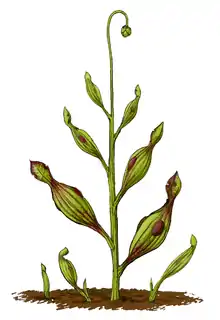 Artist's reconstruction of Archaeamphora longicervia after Li (2005)
Archaeamphora longicervia is a fossil plant species, the only member of the genus Archaeamphora. Fossil material assigned to this taxon originates from the Yixian Formation of northeastern China, dated to the Early Cretaceous (around 145 to 101 million years ago).
The species was originally described as a pitcher plant with close affinities to extant members of the family Sarraceniaceae. This would make it the earliest known carnivorous plant and the only known fossil record of Sarraceniaceae, or the New World pitcher plant family. Archaeamphora is also one of the three oldest known genera of angiosperms (flowering plants). Li (2005) wrote that "the existence of a so highly derived Angiosperm in the Early Cretaceous suggests that Angiosperms should have originated much earlier, maybe back to 280 mya as the molecular clock studies suggested". (Full article...)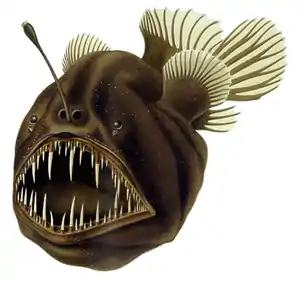 The humpback anglerfish uses a modified dorsal spine as a fishing rod with a bioluminescent lure to attract and capture prey.
Aggressive mimicry is a form of mimicry in which predators, parasites, or parasitoids share similar signals, using a harmless model, allowing them to avoid being correctly identified by their prey or host. Zoologists have repeatedly compared this strategy to a wolf in sheep's clothing. In its broadest sense, aggressive mimicry could include various types of exploitation, as when an orchid exploits a male insect by mimicking a sexually receptive female (see pseudocopulation), but will here be restricted to forms of exploitation involving feeding. For example, indigenous Australians who dress up as and imitate kangaroos when hunting would not be considered aggressive mimics, nor would a human angler, though they are undoubtedly practising self-decoration camouflage. Treated separately is molecular mimicry, which shares some similarity; for instance a virus may mimic the molecular properties of its host, allowing it access to its cells. An alternative term, Peckhamian mimicry, has been suggested (after George and Elizabeth Peckham), but it is seldom used.
Aggressive mimicry is opposite in principle to defensive mimicry, where the mimic generally benefits from being treated as harmful. The mimic may resemble its own prey, or some other organism which is beneficial or at least not harmful to the prey. The model, i.e. the organism being 'imitated', may experience increased or reduced fitness, or may not be affected at all by the relationship. On the other hand, the signal receiver inevitably suffers from being tricked, as is the case in most mimicry complexes. (Full article...) Nevin Welcome Center at the Botanic Gardens
The Cornell Botanic Gardens is a botanical garden located adjacent to the Cornell University campus in Ithaca, New York. The Botanic Gardens proper consist of 25 acres (10 ha) of botanical gardens and 150 acres (61 ha) of the F. R. Newman Arboretum. The greater Botanic Gardens includes 40 different nature areas around Cornell and Ithaca, covering 4,300 acres (1,700 ha).
The origin of the Botanic Gardens dates back to Cornell's beginning in the mid-19th century and are part of the university's longtime interest in agriculture, forestry, and the natural sciences. The Botanic Gardens saw a major planting effort during the 1930s and assumed the name Cornell Plantations in 1944. Gardens and facilities have continually expanded, including a construction program at the start of the 21st century. The Botanic Gardens also maintains four gardens on Cornell's central campus. The Botanic Gardens offers three courses for academic credit, are used as a resource by other classes, host a number of informal lectures and tours, and have played a part in many scholarly papers. , the Botanic Gardens had a $2.9 million annual operating budget. The name was changed to the current form in 2016. (Full article...)
Narcissus is a genus of predominantly spring flowering perennial plants of the amaryllis family, Amaryllidaceae. Various common names including daffodil, narcissus, and jonquil are used to describe all or some members of the genus. Narcissus has conspicuous flowers with six petal-like tepals surmounted by a cup- or trumpet-shaped corona. The flowers are generally white and yellow (also orange or pink in garden varieties), with either uniform or contrasting coloured tepals and corona.
Narcissus were well known in ancient civilisation, both medicinally and botanically, but formally described by Linnaeus in his Species Plantarum (1753). The genus is generally considered to have about ten sections with approximately 50 species. The number of species has varied, depending on how they are classified, due to similarity between species and hybridisation. The genus arose some time in the Late Oligocene to Early Miocene epochs, in the Iberian peninsula and adjacent areas of southwest Europe. The exact origin of the name Narcissus is unknown, but it is often linked to a Greek word for intoxicated (narcotic) and the myth of the youth of that name who fell in love with his own reflection. The English word "daffodil" appears to be derived from "asphodel", with which it was commonly compared. (Full article...)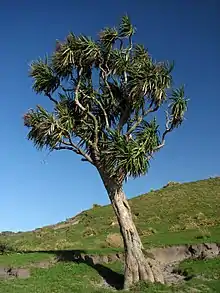 Cabbage tree on farmland, South Island, New Zealand
Cordyline australis, commonly known as the cabbage tree, tī kōuka or cabbage-palm, is a widely branched monocot tree endemic to New Zealand.
It grows up to 20 metres (66 feet) tall with a stout trunk and sword-like leaves, which are clustered at the tips of the branches and can be up to 1 metre (3 feet 3 inches) long. With its tall, straight trunk and dense, rounded heads, it is a characteristic feature of the New Zealand landscape. Its fruit is a favourite food source for the kererū and other native birds. It is common over a wide latitudinal range from the far north of the North Island at 34° 25′S to the south of the South Island at 46° 30′S. Absent from much of Fiordland, it was probably introduced by Māori to the Chatham Islands at 44° 00′S and to Stewart Island / Rakiura at 46° 50′S. It grows in a broad range of habitats, including forest margins, river banks and open places, and is abundant near swamps. The largest known tree with a single trunk is growing at Pakawau, Golden Bay / Mohua. It is estimated to be 400 or 500 years old, and stands 17 metres (56 feet) tall with a circumference of 9 metres (30 feet) at the base. (Full article...)- The Mingo Oak (also known as the Mingo White Oak) was a white oak (Quercus alba) in the U.S. state of West Virginia. First recognized for its age and size in 1931, the Mingo Oak was the oldest and largest living white oak tree in the world until its death in 1938.
The Mingo Oak stood in Mingo County, West Virginia, in a cove at the base of Trace Mountain near the headwaters of the Trace Fork of Pigeon Creek, a tributary stream of Tug Fork. The tree reached a height of over 200 feet (61 m), and its trunk was 145 feet (44 m) in height. Its crown measured 130 feet (40 m) in diameter and 60 feet (18 m) in height. The tree's trunk measured 9 feet 10 inches (3.00 m) in diameter and the circumference of its base measured 30 feet 9 inches (9.37 m). Assessments of its potential board lumber ranged from 15,000 feet (4,600 m) to 40,000 feet (12,000 m). Following the tree's felling in 1938, it was estimated to weigh approximately 5,400 long tons (5,500 t). (Full article...)
Did you know (auto-generated) -

- ... that the Sonoran blue butterfly uses Dudleya cymosa subsp. pumila as a larval foodplant and hummingbirds feed on its nectar?
- ... that non-microscopic life forms such as plants associate with microbiomes of microscopic organisms which determine their health and productivity?
- ... that Peruvian Viagra grows on the roots of plants?
- ... that the scale insect Saissetia coffeae attacks many other plants besides coffee?
- ... that George Fan, the designer of Plants vs. Zombies, was fired from PopCap Games after its acquisition by EA?
- ... that the woodland garden, "colourfully planted with exotic shrubs and herbaceous plants, dominated English horticulture from 1910 to 1960"?
- ... that the manga anthology Nanohana was inspired by efforts in Chernobyl and Fukushima to use plants to absorb radioactive material?
- ... that in the late 2000s the Campbell Soup Company began producing a spicier canned cheese sauce in their California and Texas plants than they did elsewhere to cater for different consumer tastes?
General images
 The evolution of syncarps.
a: sporangia borne at tips of leaf
b: Leaf curls up to protect sporangia
c: leaf curls to form enclosed roll
d: grouping of three rolls into a syncarp (from Evolutionary history of plants) The nodules of Medicago italica contain the nitrogen fixing bacterium Sinorhizobium meliloti. The plant provides the bacteria with nutrients and an anaerobic environment, and the bacteria fix nitrogen for the plant. (from Botany)
 The C4 carbon concentrating mechanism (from Evolutionary history of plants)
 1 An oat coleoptile with the sun overhead. Auxin (pink) is evenly distributed in its tip.
2 With the sun at an angle and only shining on one side of the shoot, auxin moves to the opposite side and stimulates cell elongation there.
3 and 4 Extra growth on that side causes the shoot to bend towards the sun. (from Botany)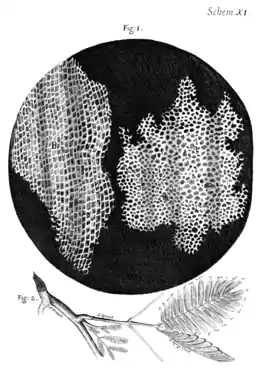
 The fossil seed Trigonocarpus (from Evolutionary history of plants)
 Micropropagation of transgenic plants (from Botany)
 A banded tube from the Late Silurian/Early Devonian. The bands are difficult to see on this specimen, as an opaque carbonaceous coating conceals much of the tube. Bands are just visible in places on the left half of the image. Scale bar: 20 μm (from Evolutionary history of plants)
 Structure of a plant cell (from Plant cell)
 A late Silurian sporangium, artificially colored. Green: A spore tetrad. Blue: A spore bearing a trilete mark – the Y-shaped scar. The spores are about 30–35 μm across. (from Evolutionary history of plants)
 The lycopod Isoetes bears microphylls (leaves with a single vascular trace). (from Evolutionary history of plants)
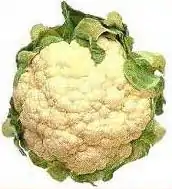 Cauliflower – Brassica oleracea var. botrytis (from Evolutionary history of plants)
 Angiosperm life cycle (from Evolutionary history of plants)
 The food we eat comes directly or indirectly from plants such as rice. (from Botany)
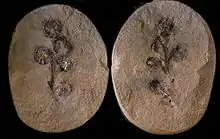 The pollen bearing organs of the early "flower" Crossotheca (from Evolutionary history of plants)
 Structure of Azadirachtin, a terpenoid produced by the Neem plant, which helps ward off microbes and insects. Many secondary metabolites have complex structures (from Evolutionary history of plants)
 Thale cress, Arabidopsis thaliana, the first plant to have its genome sequenced, remains the most important model organism. (from Botany)
 The fruit of Myristica fragrans, a species native to Indonesia, is the source of two valuable spices, the red aril (mace) enclosing the dark brown nutmeg. (from Botany)
 The branching pattern of megaphyll veins may indicate their origin as webbed, dichotomising branches. (from Evolutionary history of plants)
 Paper chromatography of some spinach leaf extract shows the various pigments present in their chloroplasts. (from Botany)
 External mold of Lepidodendron trunk showing leaf scars from the Upper Carboniferous of Ohio (from Evolutionary history of plants)
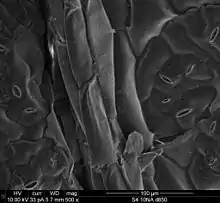 This is an electron micrograph of the epidermal cells of a Brassica chinensis leaf. The stomates are also visible. (from Plant cell)
 The inflorescences of the Bennettitales are strikingly similar to flowers (from Evolutionary history of plants)
.svg.png.webp) Cladogram of plant evolution (from Evolutionary history of plants)
Cladogram of plant evolution (from Evolutionary history of plants) The stem-loop secondary structure of a pre-microRNA from Brassica oleracea (from Evolutionary history of plants)
.png.webp) The diversity of leaves (from Evolutionary history of plants)
The diversity of leaves (from Evolutionary history of plants) Echeveria glauca in a Connecticut greenhouse. Botany uses Latin names for identification; here, the specific name glauca means blue. (from Botany)
 A nineteenth-century illustration showing the morphology of the roots, stems, leaves and flowers of the rice plant Oryza sativa (from Botany)
 The transitional fossil Runcaria (from Evolutionary history of plants)
 Large number of petals in roses is the result of human selection (from Evolutionary history of plants)
- Leaf lamina. The megaphyllous leaf architecture arose multiple times in different plant lineages (from Evolutionary history of plants)
 The Devonian marks the beginning of extensive land colonization by plants, which – through their effects on erosion and sedimentation – brought about significant climatic change. (from Evolutionary history of plants)
 Phylogenetic plant (in the broadest sense) tree, showing the major clades and traditional groups. Monophyletic groups are in black and paraphyletics in blue. Diagram according to symbiogenetic origin of plant cells, and phylogeny of algae, bryophytes, vascular plants, and flowering plants. (from Evolutionary history of plants)
 The trunk of early tree fern Psaronius, showing internal structure. The top of the plant would have been to the left of the image (from Evolutionary history of plants)
 Five of the key areas of study within plant physiology (from Botany)
- The Linnaean Garden of Linnaeus' residence in Uppsala, Sweden, was planted according to his Systema sexuale. (from Botany)

 A piece of fossilized driftwood from the Middle Devonian (Givetian) of New York State. (from Evolutionary history of plants)
Related topics


Biosphere • Botany • Evolutionary history of plants • Flower • Forest • Fruit • Garden • Gardening • Greenhouse • Houseplant • List of poisonous plants • Paleobotany • Photosynthesis • Plant cell • Tree • Vegetable • Vegetation •
| Subdisciplines | |||||||||||
|---|---|---|---|---|---|---|---|---|---|---|---|
| Plant groups | |||||||||||
| Plant anatomy |
| ||||||||||
| Plant physiology Materials | |||||||||||
| Plant growth and habit | |||||||||||
| Reproduction | |||||||||||
| Plant taxonomy | |||||||||||
| Practice | |||||||||||
| |||||||||||


Related portals
Tasks
- Describe all families, genera and species of the kingdom Plantae.
- For species, describe botanical properties, distribution, multiplication, usage (medicine, food, etc.), botanical history, cultivation information.
- Develop and implement a robust method of naming plant article for the ease of navigation and searching for Wikipedia users.
- Maintain Category:Plants and its subcategories.
- Plant articles needing attention
- Plant articles needing expert attention
- Unidentified plant images - Unidentified plants on Commons
- Missing encyclopedic articles about Botany.
- Missing encyclopedic articles in Hotlist of Plants
- Requested articles about plants (botany)
- New article announcements — bot-assisted
Associated Wikimedia
The following Wikimedia Foundation sister projects provide more on this subject:
-
 Commons
Free media repository -
 Wikibooks
Free textbooks and manuals -
 Wikidata
Free knowledge base -
 Wikinews
Free-content news -
 Wikiquote
Collection of quotations -
 Wikisource
Free-content library -
 Wikiversity
Free learning tools -
 Wiktionary
Dictionary and thesaurus
More portals
-
 List of all portalsList of all portals
 -
 The arts portal
 -
 Biography portal
 -
 Current events portal
 -
 Geography portal
 -
 History portal
 -
 Mathematics portal
 -
 Science portal
 -
 Society portal
 -
 Technology portal
 -
 Random portalRandom portal
 -
 WikiProject PortalsWikiProject Portals