Portal:Tanks

- General Portal topics
- Activities
- Culture
- Geography
- Health
- History
- Mathematics
- Nature
- People
- Philosophy
- Religion
- Society
- Technology
- Random portal
The Tanks Portal An M4 Sherman tank in Italy in 1943 during WWII A tank is an armoured fighting vehicle intended as a primary offensive weapon in front-line ground combat. Tank designs are a balance of heavy firepower, strong armour, and good battlefield mobility provided by tracks and a powerful engine; usually their main armament is mounted in a turret. They are a mainstay of modern 20th and 21st century ground forces and a key part of combined arms combat. Modern tanks are versatile mobile land weapons platforms whose main armament is a large-caliber tank gun mounted in a rotating gun turret, supplemented by machine guns or other ranged weapons such as anti-tank guided missiles or rocket launchers. They have heavy vehicle armour which provides protection for the crew, the vehicle's munition storage, fuel tank and propulsion systems. The use of tracks rather than wheels provides improved operational mobility which allows the tank to overcome rugged terrain and adverse conditions such as mud and ice/snow better than wheeled vehicles, and thus be more flexibly positioned at advantageous locations on the battlefield. These features enable the tank to perform well in a variety of intense combat situations, simultaneously both offensively (with direct fire from their powerful main gun) and defensively (as fire support and defilade for friendly troops due to the near invulnerability to common infantry small arms and good resistance against heavier weapons, although anti-tank weapons used in 2022, some of them man-portable, have demonstrated the ability to destroy older generations of tanks with single shots), all while maintaining the mobility needed to exploit changing tactical situations. Fully integrating tanks into modern military forces spawned a new era of combat: armoured warfare. Until the arrival of the main battle tank, tanks were typically categorized either by weight class (light, medium, heavy or superheavy tanks) or doctrinal purpose (breakthrough-, cavalry-, infantry-, cruiser-, or reconnaissance tanks). Some being larger and very heavily armoured and with large guns, while others are smaller, lightly armoured, and equipped with a smaller caliber and lighter gun. These smaller tanks move over terrain with speed and agility and can perform a reconnaissance role in addition to engaging enemy targets. The smaller, faster tank would not normally engage in battle with a larger, heavily armoured tank, except during a surprise flanking manoeuvre. (Full article...)- Selected article - Selected battle -
The Third Battle of Kharkov was a series of battles on the Eastern Front of World War II, undertaken by Army Group South of Nazi Germany against the Soviet Red Army, around the city of Kharkov between 19 February and 15 March 1943. Known to the German side as the Donets Campaign, and in the Soviet Union as the Donbas and Kharkov operations, the German counterstrike led to the recapture of the cities of Kharkov and Belgorod. As the German 6th Army was encircled in the Battle of Stalingrad, the Red Army undertook a series of wider attacks against the rest of Army Group South. These culminated on 2 January 1943 when the Red Army launched Operation Star and Operation Gallop, which between January and early February broke German defenses and led to the Soviet recapture of Kharkov, Belgorod, Kursk, as well as Voroshilovgrad and Izium. The Soviet victories caused participating Soviet units to over-extend themselves. Freed on 2 February by the surrender of the German 6th Army, the Red Army's Central Front turned its attention west and on 25 February expanded its offensive against both Army Group South and Army Group Center. Months of continuous operations had taken a heavy toll on the Soviet forces and some divisions were reduced to 1,000–2,000 combat effective soldiers. On 19 February, Field Marshal Erich von Manstein launched his Kharkov counterstrike, using the fresh II SS Panzer Corps and two panzer armies. Manstein benefited greatly from the massive air support of Field Marshal Wolfram von Richthofen's Luftflotte 4, whose 1,214 aircraft flew over 1,000 sorties per day from 20 February to 15 March to support the German Army, a level of airpower equal to that during the Case Blue strategic offensive a year earlier. The Wehrmacht flanked, encircled, and defeated the Red Army's armored spearheads south of Kharkov. This enabled Manstein to renew his offensive against the city of Kharkov proper on 7 March. Despite orders to encircle Kharkov from the north, the SS Panzer Corps instead decided to directly engage Kharkov on 11 March. This led to four days of house-to-house fighting before Kharkov was recaptured by the SS Division Leibstandarte on 15 March. The German forces recaptured Belgorod two days later, creating the salient which in July 1943 would lead to the Battle of Kursk. The German offensive cost the Red Army an estimated 90,000 casualties. The house-to-house fighting in Kharkov was also particularly bloody for the German SS Panzer Corps, which had suffered approximately 4,300 men killed and wounded by the time operations ended in mid-March. (Full article...)Selected picture
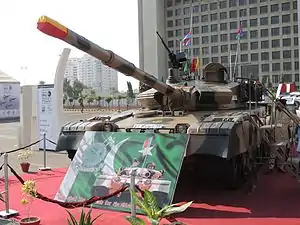
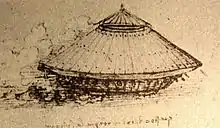
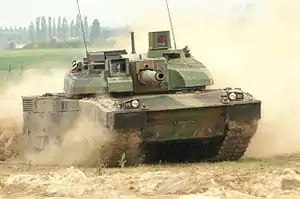
General imagesThe following are images from various tank-related articles on Wikipedia.
Categories Category puzzle Select [►] to view subcategories
Tanks Tanks by country Tanks by period by country Tanks by country by type Tanks of Argentina Tanks of Australia Tanks of Austria Tanks of Brazil Tanks of Canada Tanks of China Tanks of the People's Republic of China Tanks of Croatia Tanks of the Czech Republic Tanks of Czechoslovakia Tanks of Egypt Tanks of Finland Tanks of France Tanks of Germany Tanks of Hungary Tanks of India Tanks of Iran Tanks of Iraq Tanks of Israel Tanks of Italy Tanks of Japan Tanks of New Zealand Tanks of North Korea Tanks of Norway Tanks of Pakistan Tanks of Peru Tanks of Poland Tanks of Romania Tanks of Russia Tanks of Serbia Tanks of Slovakia Tanks of Slovenia Tanks of South Korea Tanks of the Soviet Union Tanks of Spain Tanks of Sweden Tanks of Switzerland Tanks of Turkey Tanks of Ukraine Tanks of the United Kingdom Tanks of the United States Tanks of Yugoslavia Tanks by period World War I tanks Tanks of the interwar period World War II tanks Tanks of the Cold War Tanks of the post–Cold War period Tanks introduced in 1937 Tanks introduced in 1938 Tanks introduced in 1939 Tanks introduced in 1940 Tanks introduced in 1941 Tanks introduced in 1942 Tanks introduced in 1943 Tanks introduced in 1944 Heavy tanks by period Light tanks by period Main battle tanks by period Medium tanks by period Tanks by period by country Tanks by type Tanks by country by type Airborne tanks Amphibious tanks Cavalry tanks Cruiser tanks Flame tanks Fourth-generation main battle tanks Heavy tanks Infantry tanks Light tanks Main battle tanks Medium tanks Multi-turreted tanks Super-heavy tanks Tanks with autoloaders Tank designers no subcategories Experimental and prototype tanks Trial and research tanks Fiction about tanks Tank simulation video games History of the tank Historians of armoured warfare Tank museums Tanks of the Cold War by country Trial and research tanks World War II tanks by country Individual tanks no subcategories Tank personnel Royal Tank Regiment officers Royal Tank Regiment soldiers Tank commanders Tank subassembly Armoured fighting vehicle equipment Tank engines Tank suspensions Tank guns Tank tactics no subcategories Tank units and formations Royal Tank Regiment Tank warfare by conflict World War I tanks World War II tanks Topics
WikiProjectsRelated portalsAssociated WikimediaThe following Wikimedia Foundation sister projects provide more on this subject:
Things to do
Sources
Discover Wikipedia using portals
| ||||||||||||||||||||||||||||||||


_March_1944.jpg.webp)


.jpg.webp)



.jpg.webp)
_(cropped).jpg.webp)


_02.jpg.webp)



.jpg.webp)
.jpg.webp)


